A drawstring cotton pouch is a small fabric bag closed by a cord that runs through a channel at the top. It is one of the most flexible items we make: fashion retailers use it as a dust bag, coffee roasters as an outer pack, cosmetics and jewellery brands as gift packaging, and event organisers as a kit bag for runners. Because the uses are so different, the right pouch for one job is often wrong for another. This guide covers the decisions that matter: closure type, size, fabric, cord, lining and print. Short answer: choose a double drawstring when the pouch must close neatly, size it to the product plus its depth, and use 140 g/m² fabric unless the pouch has to carry weight.
What types of drawstring bags are there?
There are four main types: single drawstring, double drawstring, drawstring backpack and zip pouch.
| Type | How it closes | Best for |
|---|---|---|
| Single drawstring | One cord in one channel, pulled from one side | Small pouches, sachets, light contents |
| Double drawstring | Two cords exiting on opposite sides, pulled in both directions | Dust bags, gift packaging, anything that must close evenly and stay closed |
| Drawstring backpack | Cords double as shoulder straps | Runs, sports events, school and gym kits |
| Zip pouch | Zip instead of a cord | Cosmetics, stationery, small items that must not fall out |
Single and double drawstring pouches are both made as standard in our cotton pouch range, and zipped versions are possible. A double drawstring closes more neatly and tighter, which is why it is the usual choice for premium packaging.
What size should a drawstring pouch be?
Most pouches fall between 15 × 20 cm and 30 × 40 cm; the right width is the product's width plus its depth. Our pouches are made in 15 × 20 cm (mini), 20 × 25 cm, 25 × 30 cm and 30 × 40 cm, plus custom sizes. The table shows what each size typically holds.
| Size | Typical contents |
|---|---|
| 10 × 14 cm (custom) | Jewellery, fragrance sachets, small refills |
| 15 × 20 cm | Cosmetics, soaps, small gifts, accessories |
| 17 × 30 cm (custom) | 250 g of coffee or tea, bottles of perfume |
| 20 × 25 cm | Phones, wallets, small electronics, product packaging |
| 25 × 30 cm | Books, children's shoes, folded textiles |
| 30 × 40 cm | Shoes, clothing, small handbags, gym kit |
For three-dimensional products, a flat measurement is misleading. A practical rule: the pouch width should be the product width plus its depth, plus a little ease; the height should be the product height plus half its depth, plus about 5 cm so the cord can close above the product. A handbag dust bag sized exactly to the bag's front face will not close around it.
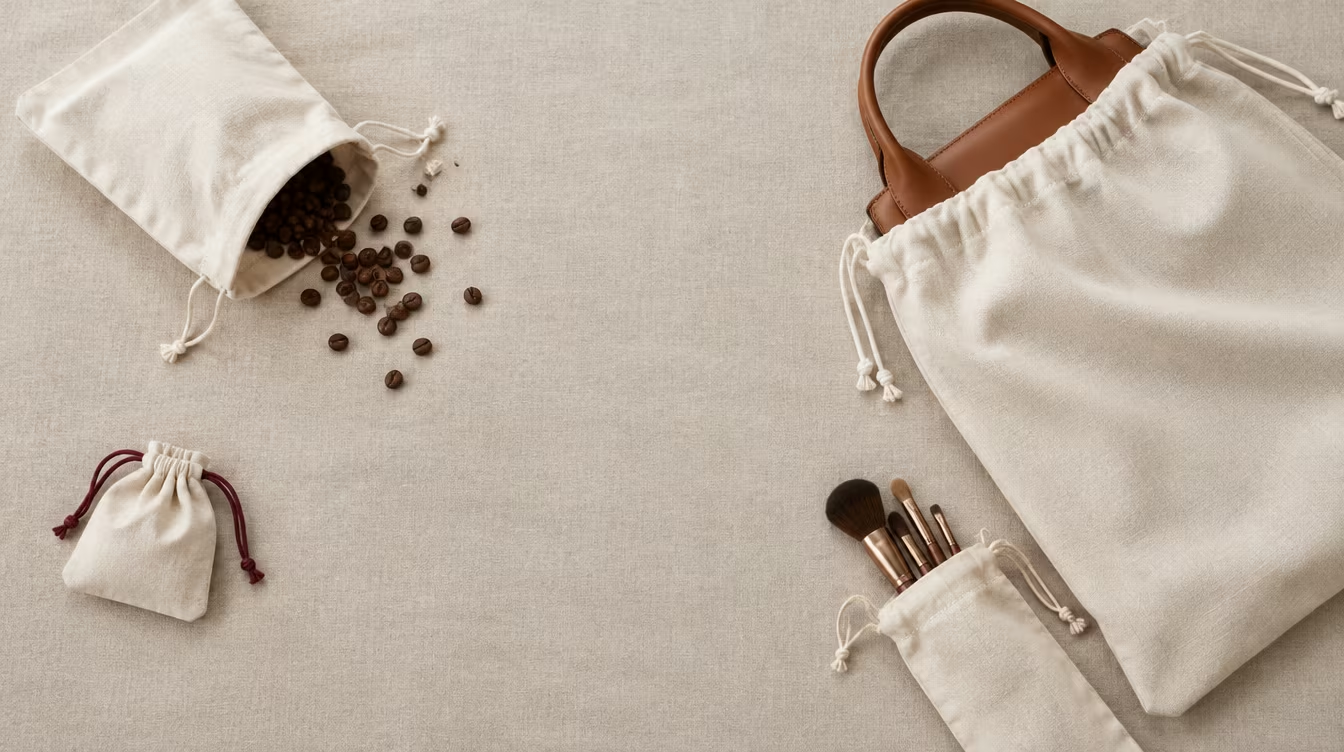
Pouches from jewellery size to shoe bag size:
Which fabric is best for a drawstring pouch?
140 g/m² cotton suits most pouches; use 200 g/m² for dust bags and 320 g/m² canvas for shoe and gym bags. Pouches are produced from four fabric weights:
- 100 g/m²: light and economical. Suits single use packaging and inner bags.
- 140 g/m²: the standard. Strong enough for gifts, coffee and cosmetics and soft enough to fold.
- 200 g/m²: denser and more opaque. The right weight for dust bags and premium packaging, where the pouch is part of the product experience.
- 320 g/m² canvas: heavy. For shoe bags, gym bags and anything that carries weight or rubs against hard objects.
Natural raw cotton gives the rustic, linen-like look many food and cosmetics brands ask for. Dyed fabric is used when the pouch has to match a brand colour. If you are choosing between raw cotton qualities, our raw cotton bag guide explains the difference between polyester cotton blends and 100% cotton.
Which cord should a drawstring pouch have?
Cotton cord is the standard; satin ribbon or a cord in a contrasting colour makes a pouch look more premium. The cord is small but it is what people touch first. Points to specify:
- Material: cotton cord matches the fabric and feels natural; satin ribbon looks more formal on gift packaging; flat cotton tape is softer on the hand for heavier pouches.
- Colour: a cord in a contrasting colour (burgundy, navy and black are common requests) lifts a plain natural pouch without changing the fabric.
- Ends: a simple knot is the most economical. Cord ends or a cord stopper look more finished and keep the pouch adjustable.
- Channel position: a channel set a few centimetres below the top edge leaves a small frill above the closure, which looks softer than a channel at the very top.
When does a pouch need a lining?
A single layer of cotton is breathable and fine for most contents. Two situations call for a second layer:
- Fine powders and granules. Contents such as activated carbon, herbs or bath salts can dust through a single weave and stain the outside. An inner layer of fine, breathable fabric keeps the contents in while letting air through.
- A premium feel. A lining in a different colour makes the pouch thicker, more opaque and more substantial in the hand.
A note for coffee and food brands: cotton protects and presents the product, but it does not keep coffee fresh. Use the cotton pouch as an outer pack around a sealed, valved bag, and treat the pouch as reusable packaging that the customer keeps.
What are drawstring pouches used for?
The most common uses are dust bags for fashion, coffee and tea packaging, cosmetics and jewellery pouches, race kit bags and corporate gifts. On our site, pouches are the second most added product family to quote lists, after raw cotton bags.
Dust bags for fashion and accessories. Handbags, shoes and small leather goods are shipped and stored in soft, breathable dust bags. A 200 g/m² cotton in natural, white or black with a double drawstring and a single colour logo is the classic specification.
Coffee and tea. Specialty roasters use drawstring sacks as gift packaging or for retail shelves. Common sizes are around 17 × 30 cm for 250 g and 21 × 36 cm for 500 g, with a one or two colour print on the front.
Cosmetics, soaps and jewellery. Small pouches from 10 × 14 cm to 15 × 20 cm, often double drawstring, sometimes with a contrasting cord to match the brand.
Runs and sports events. Drawstring backpacks for race kits, medals and participant gifts. These are ordered in large numbers with tight deadlines, so the brief and artwork should be ready early.
Corporate gifts. A printed pouch turns a set of small items, such as a notebook, a pen and a keyring, into one presentable gift.
Pouches used as dust bags, e-commerce packaging, coffee and tea samples and guest gifts:
How do you print on a drawstring pouch?
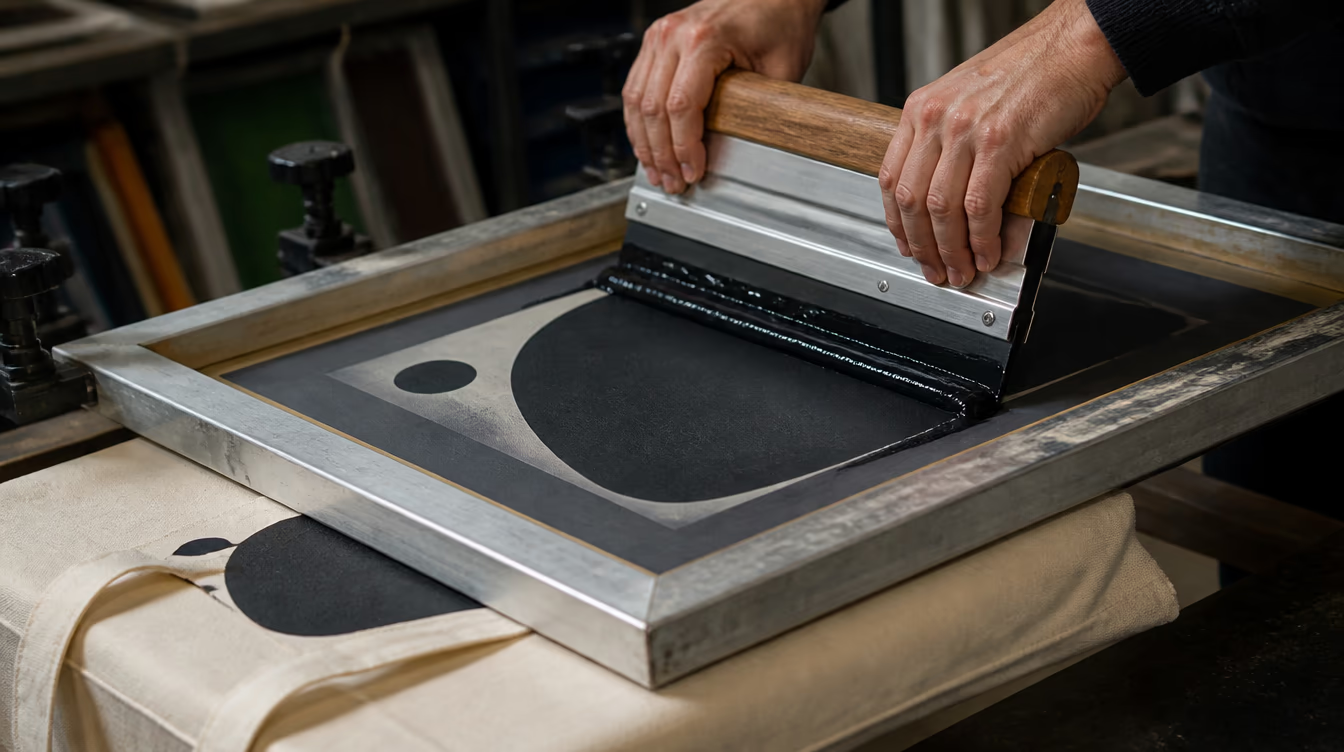
Use a one or two colour screen print, placed well clear of the drawstring channel. Print areas on pouches are small, so the design has to be simple and well placed. Screen printing gives a sharp one or two colour logo at the lowest cost. Transfer printing is used for fine detail and full colour. Keep the print at least 2 to 3 cm away from the drawstring channel and the side seams: when the pouch is closed, the top gathers and anything printed near it disappears into the folds. The printing techniques guide explains the methods in more detail.
How much does a drawstring pouch cost, and what is the minimum order?
Pouch prices are driven more by sewing labour than by fabric, and the minimum order is lower than for bags. A pouch uses far less fabric than a tote, but sewing the channel and threading the cord take time, so labour is a larger share of the price. The cost rises with size, fabric weight, a second drawstring, lining, special cords or cord ends and the number of print colours. Quantity has the usual effect: the unit price drops as the order grows.
Our minimum order for cotton pouches is 100 pieces, lower than for bags, which makes pouches practical for small brands, test launches and seasonal packaging.
What should a pouch enquiry include?
- Quantity, or two or three quantity levels
- Size, or the dimensions of the product that goes inside
- Single drawstring, double drawstring, backpack or zip
- Fabric weight and colour
- Cord material and colour, and the finish of the ends
- Lining, if needed, and what the pouch will contain
- Logo file, print colours, one or both sides
- Delivery date and address
Duru Çanta has been producing cotton bags in Istanbul since 2002. Send it through the online quote form or see how we produce on the cotton bag production page. For a larger bag in heavy fabric, see the canvas tote guide.
Frequently asked questions
What is the difference between a single and a double drawstring?
A single drawstring has one cord pulled from one side. A double drawstring has two cords pulled from opposite sides; it closes more evenly and tighter and looks neater, which is why it is preferred for dust bags and gift packaging.
What is the minimum order for printed drawstring pouches?
100 pieces.
Can cotton pouches be used for food?
Cotton pouches work well as outer packaging for coffee, tea and dry goods. Products that need protection from air or moisture should be sealed in an inner bag, with the cotton pouch around it.
What size dust bag do I need for a handbag?
Add the bag's depth to its width, then add a few centimetres of ease. For the height, add half the depth plus about 5 cm so the drawstring can close above the handles.
Can drawstring pouches be washed?
Yes. Wash at low temperature and inside out. Cotton may shrink slightly in a hot wash.
Can the pouch have a lining?
Yes. A second fabric layer is used for fine contents such as powders or granules, or simply to give a premium pouch more body. Tell us what will go inside and we will suggest the right inner fabric. Questions about a special project can go through the contact page.