On a tote bag, print is the only surface where a brand is actually seen. The same bag printed with the right technique stays readable for years; printed with the wrong one it washes off on the second cycle. This article compares the six techniques used in the trade on colour count, quantity, durability, fabric compatibility and cost, and settles which one is right for which job.
Comparison table
| Technique | Colour limit | Efficient quantity | Wash durability | Hand feel | Relative cost |
|---|---|---|---|---|---|
| Screen printing | A separate screen per colour | High volume | Very high | Slightly noticeable | Falls sharply with quantity |
| DTF (film transfer) | Unlimited, photographs included | Low and medium volume | High | Distinct film feel | Barely changes with quantity |
| DTG (direct to garment) | Unlimited | Very low volume | Medium | Almost none | High |
| Heat transfer (flex, flock) | Few colours | Low volume | Medium - high | Thick, raised | Medium |
| Sublimation | Unlimited | Medium | Very high | None at all | Medium |
| Embroidery | Limited by thread count | Any quantity | Highest | Raised texture | High |
Screen printing
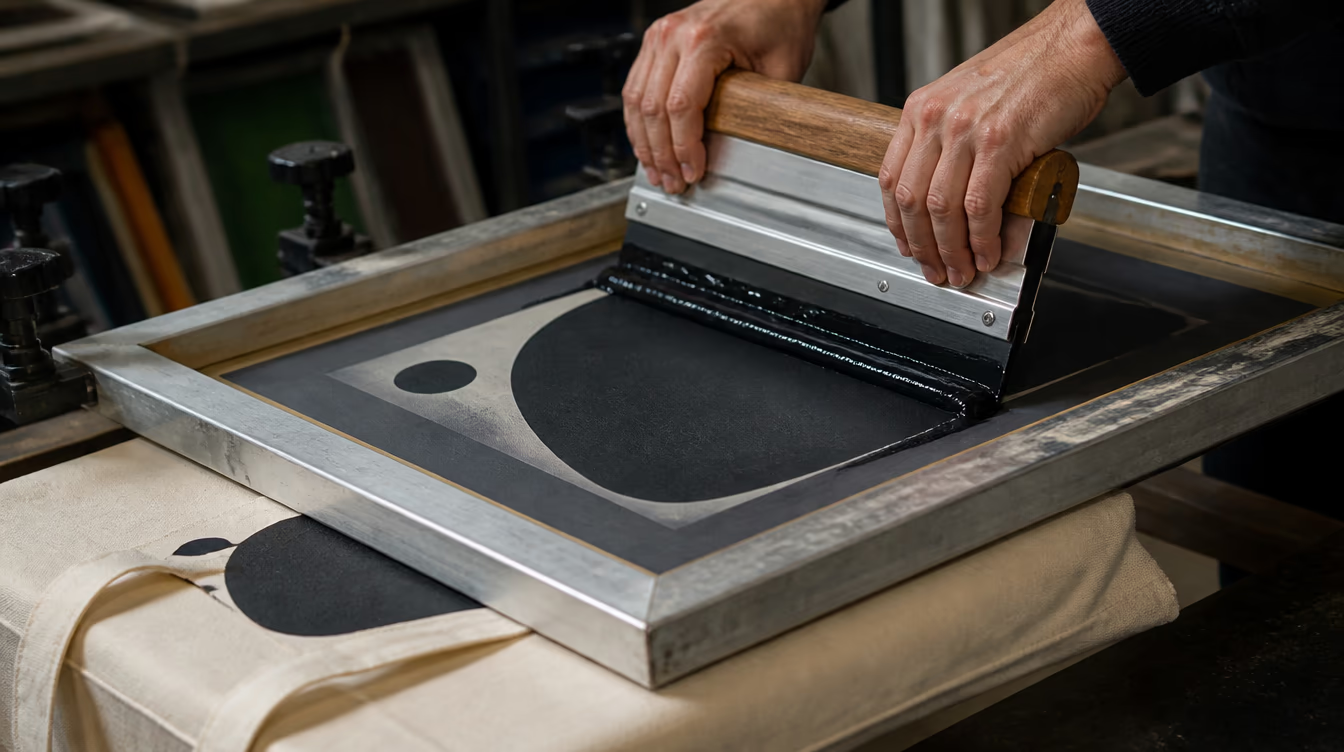
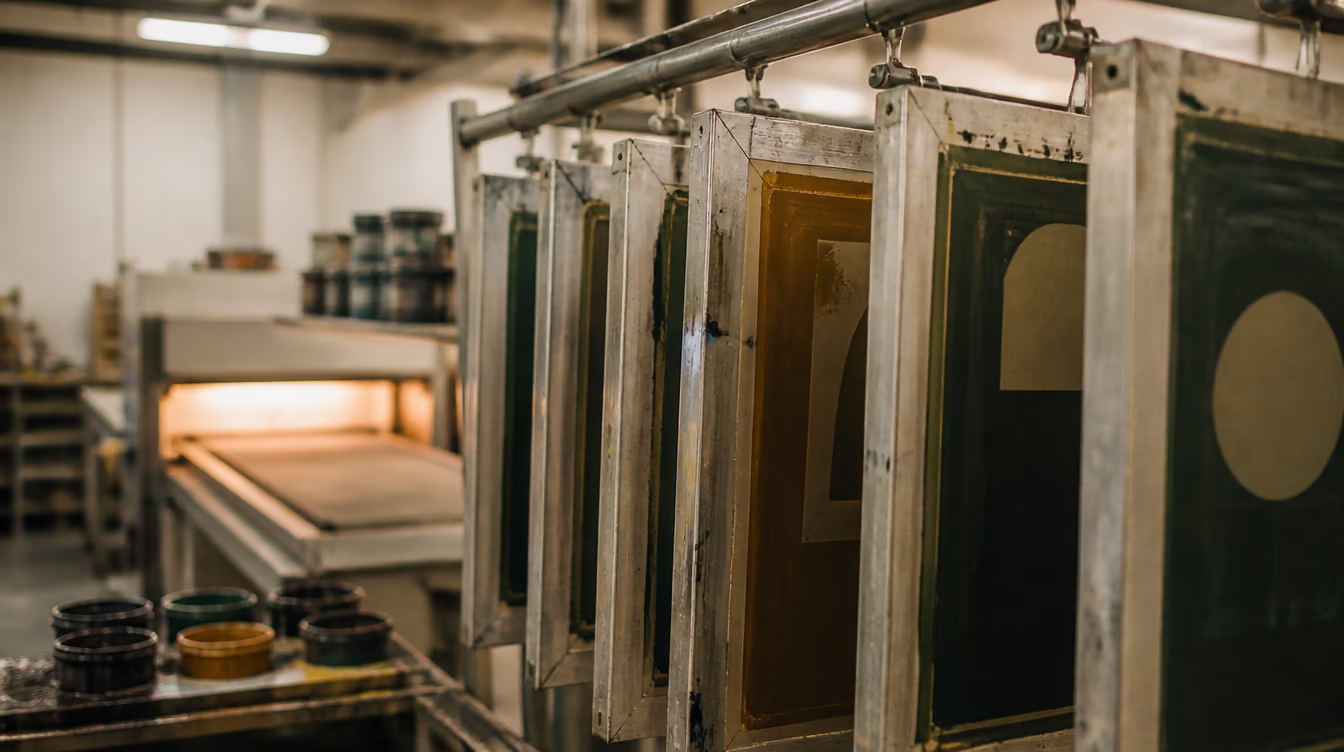
Screen printing pushes ink through a stretched mesh onto the fabric. It is the classic and still the most common technique for promotional bags.
How it works: A separate screen is prepared for each colour. The bag is placed on the platen, ink is pulled through the mesh, the print is cured and, if needed, the process is repeated for the next colour.
Strength: At volume its unit cost is unmatched. Colour density is strong and light inks cover well even on dark fabric. Wash durability is in the top group.
Weakness: Screen preparation is a fixed cost and every colour repeats it. It is not suitable for gradients or photographic images.
When to choose it: One or two colour logos, high quantities, an expectation of long life.
DTF printing
DTF prints the artwork onto a special film, fixes it with adhesive powder and then transfers it to the fabric with a heat press. It spread quickly in recent years and has begun to replace screen printing on low volume work.
Strength: No colour limit. Photographs, gradients and fine detail print without difficulty. With no screen preparation it is very advantageous at low quantities, and every bag can carry different artwork.
Weakness: The print sits on the fabric as a film layer, so it can be felt by hand. On large solid areas that feel becomes pronounced and breathability drops. Unit cost does not fall much as quantity rises.
When to choose it: Multi colour artwork, low and medium quantities, personalised printing, fast delivery.
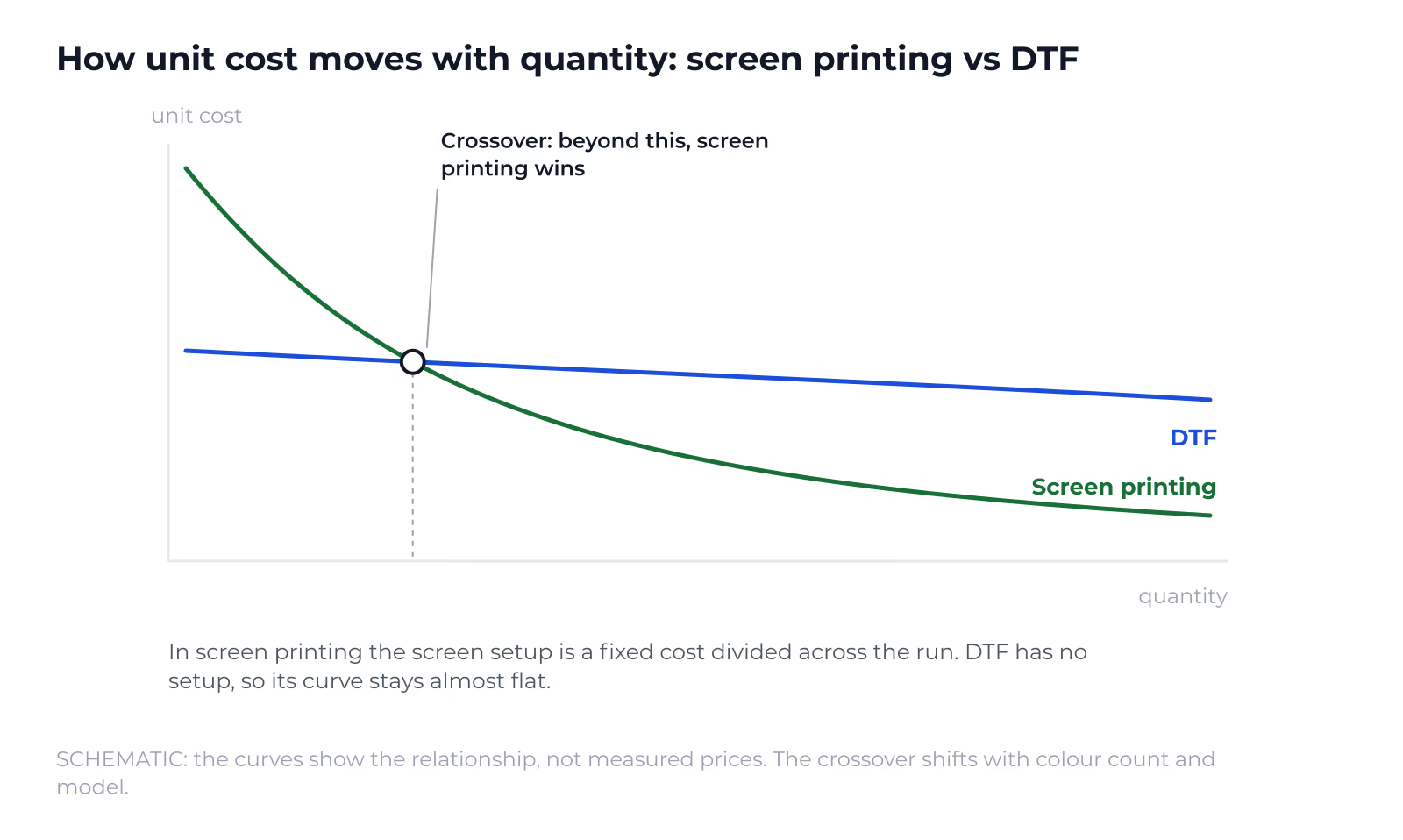
The crossover point between screen and DTF
The choice between the two is usually decided where quantity and colour count intersect:
- One colour, high quantity: screen printing is clearly more economical, and the gap widens as quantity grows.
- One colour, low quantity: with the screen cost spread over few pieces, DTF can move ahead.
- Multi colour artwork, any quantity: since each colour means another screen, beyond four colours DTF is more suitable in almost every case.
- Photographs or gradients: screen printing is not an option.
DTG printing
DTG sprays ink directly into the fabric. Think of a paper printer working on cloth.
Strength: Almost no hand feel, the print sinks into the fabric. Single piece production is possible.
Weakness: Good results only on cotton and light colours. Dark fabric needs a white underbase, which raises the cost. Wash durability sits behind screen printing.
When to choose it: Very low quantities, personalised products, light coloured cotton fabric.
Heat transfer: flex and flock
Cut coloured film is bonded to the fabric with a heat press. Flex gives a flat, slightly glossy surface, flock a velvety, raised one.
Strength: Sharp edges, vivid colour, a quick solution at low quantities. Common in sports and name printing.
Weakness: Thick over large areas and not breathable. Very fine detail cannot be cut. Edges can lift over time.
When to choose it: Few colours with sharp outlines, small runs of names and numbers.
Sublimation
Heat turns the dye into a gas that penetrates polyester fibre. The print is not on the surface, it is inside it.
Strength: Leaves no hand feel at all, does not fade and does not crack. Full surface, edge to edge printing is possible.
Weakness: Works only on polyester and its derivatives, so it cannot be used on cotton. It also needs a light coloured base.
When to choose it: All over patterns on bags made from polyester or technical fabric.
Embroidery
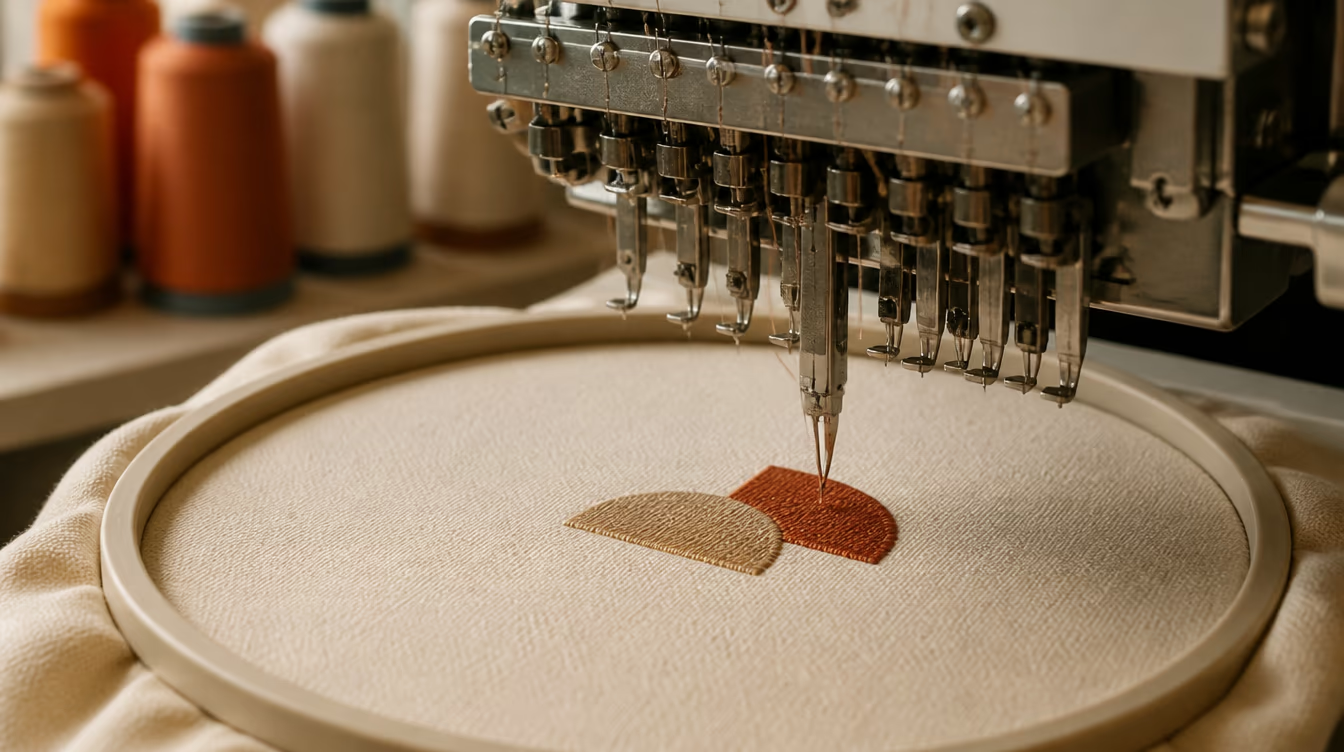
The logo is stitched in thread. It is not a print but a layer added to the fabric itself.
Strength: The highest perceived quality and the longest life. Washing has almost no effect on it.
Weakness: Cost is high and calculated on stitch count. Fine detail and small lettering cannot be stitched. On light fabric it causes puckering.
When to choose it: Corporate gifts, canvas or gabardine bodies, a permanent brand impression.
Technique compatibility by fabric
| Fabric | Screen | DTF | DTG | Transfer | Sublimation | Embroidery |
|---|---|---|---|---|---|---|
| Raw cotton | Excellent | Suitable | Suitable | Suitable | Not suitable | Suitable |
| Canvas | Excellent | Suitable | Suitable | Suitable | Not suitable | Excellent |
| Gabardine | Suitable | Suitable | Limited | Suitable | Limited | Excellent |
| Nonwoven | Suitable | Limited | Not suitable | Limited | Not suitable | Not suitable |
| Impertex | Suitable | Limited | Not suitable | Suitable | Limited | Limited |
| Polyester | Suitable | Suitable | Not suitable | Suitable | Excellent | Suitable |
The differences between the fabrics themselves are tabulated in our fabric selection guide.
Preparing the artwork correctly
A significant share of print problems begins not in production but in the file that arrives.
- Send a vector file. A non vector logo breaks up at the edges when scaled. For screen printing a vector file is mandatory.
- State colours as Pantone references. The colour on your screen is not the colour on the fabric. Without a reference the manufacturer picks the nearest tone and the result becomes an argument.
- Check line weights. Very thin lines fill in on screen printing and cannot be cut in transfer. A general rule: any detail you cannot read comfortably at print size will not be readable on fabric at all.
- Give the print area as a measurement. "Centre it" is not an instruction. Specify distances from the handle root and the bottom edge.
- Account for fabric colour. A light logo on dark fabric needs an opaque base, which affects cost.
Print area and placement
Three measurements matter in placement:
- Distance from the top edge: a full bag curls at the top. Placing the print too high makes the logo bend in use.
- Distance from the handle root: the area where the handle is stitched becomes thicker. A print running into it will not sit flat.
- Gusset line: on a gusseted bag, print falling on the side fold looks broken when the bag is empty.
On foldable models the fold lines must also be taken into account; details are in our foldable bag guide.
What improves wash durability
- Correct curing time and temperature after printing. Under curing lowers durability whatever the technique.
- Washing inside out at low temperature.
- Not ironing directly over the print.
- Avoiding bleach and harsh chemicals.
Asking a manufacturer for wash test results is the most practical quality distinction available. A company that does not run the test is guessing when it talks about durability. Other questions worth asking are in our manufacturer selection guide.
Quality control after printing
The checks to run on a delivered batch are specific and all can be done by eye.
- Colour consistency: take ten random units and lay them side by side. A tonal shift means the ink mix was renewed mid run.
- Position drift: stack the same ten and look at the alignment. More than two centimetres of drift means the platen setting moved.
- Edge sharpness: spread at the print edge indicates the screen has lost tension.
- Cure check: press a fingernail into the print and pull. If ink comes away, curing was insufficient and it will wash off.
- Stretch test: stretch the printed area gently. Cracking means the ink was laid on too thick.
These five checks take five minutes and catch a problem batch before distribution.
Labels and secondary print areas
The body print is usually the only area considered, yet a bag has three more surfaces that can carry a brand.
Inner label
A woven or satin label added to the side seam is the permanent identity of the product. It is unaffected by washing and stays readable long after the body print has worn. It costs little and noticeably raises perceived quality on corporate work.
Print on the handle
A narrow print on the handle webbing sits at eye level while the bag is carried on the shoulder. Being a small area, only simple text or a mark can be used.
Base and side panels
On gusseted models the side panels are a second print area. The main message stays on the body, while contact details or a campaign address go on the side.
On foldable models the pocket surface visible when folded is another area; details are in our foldable bag guide.
Frequently asked questions
Is DTF printing durable on a cotton bag?
Applied correctly it is durable and survives many washes. The critical factor is the heat press setting of temperature, time and pressure; an under applied transfer lifts at the edges. The difference between DTF and screen printing is felt more in the hand than in durability.
Which technique is cheapest?
It depends on quantity. On high volume single colour work, screen printing is clearly the most economical. At low quantities the screen cost is spread over few pieces and DTF moves ahead. No single technique is cheapest in every case.
How many colours can be screen printed?
Technically many, but each colour means another screen and another pass. Above four colours screen printing usually stops being economical and digital techniques take over.
Is environmentally friendlier printing possible?
Water based screen inks contain fewer solvents than plastisol and leave a softer hand on cotton. Reducing the print area and the colour count also lowers both cost and environmental load.
How much does printing both sides add?
It roughly doubles the print line, because the operation is repeated. One side gives sufficient visibility in most campaigns. The full cost breakdown is in our cost article.
Embroidery or printing?
For corporate gifts and long life products, embroidery leaves a stronger impression. On high volume promotional distribution, printing is preferred for cost. A mixed solution also works: printing on the body and embroidery on a small area.
Can I see a proof before production?
Yes, and you should. A colour proof shows two things you cannot see on screen: the real tone of the colour on the fabric, and whether fine detail is readable.
Why is printing more expensive on dark fabric?
To make a light ink cover a dark ground, a white underbase is printed first. That is effectively printing one more colour, so both screens and passes increase. The same logo is done in a single pass on light fabric.
How large can the print area be?
The limit is set by the platen, not by the bag. Prints covering most of the body are possible, but the handle root and seam allowances must stay outside the print area. If full surface printing is the goal, say so at pattern stage, because on some models printing happens before sewing.
Which technique suits a small order?
DTF for low quantity multi colour work, DTG for very low quantity on light coloured cotton. To compare technique pricing for your own quantity, request it through the quote form.
To see a side by side comparison for your artwork and quantity, send your logo file and quantity through our promotional bag page or write to us directly on the contact page.