A canvas tote is a bag sewn from heavy, tightly woven cotton. It costs more than a raw cotton bag, and buyers pay for that because a good canvas tote is carried for years, stands up on its own and turns a logo into something people actually want to use. Most canvas enquiries we receive, from brands in Scandinavia and Germany to museums and hospitals in Turkey, describe the bag with the same handful of specifications: a weight in gsm or ounces, a base that holds its shape, reinforced handles and a print. This guide explains each of those so that your brief and the quotes you get back mean the same thing. Short answer: for most branded totes, 280 to 320 g/m² (about 8 to 9.5 oz) is the right weight.
What is canvas weight in gsm and oz?
Canvas weight is given in grams per square metre (gsm, g/m²) in Europe and Turkey, and in ounces per square yard (oz) in the United States and the United Kingdom. The conversion is simple: 1 oz/yd² = 33.9 g/m².
| Ounces (oz/yd²) | Grams (g/m²) | How it feels | Typical use |
|---|---|---|---|
| 6.5 oz | 220 g | Soft, drapes | Promotional totes with a better hand than raw cotton |
| 8 oz | 270 g | Firm, holds a crease | Everyday totes, conference bags |
| 9.5 oz | 320 g | Stiff, keeps its shape | Retail totes, merchandise, gift bags |
| 10 oz | 340 g | Stiff | Structured totes |
| 12 oz | 407 g | Very stiff | Boat style totes, work bags |
| 14 oz | 475 g | Board-like when new | Heavy duty and premium retail bags |
Our standard canvas lines are 220 g/m² canvas gabardine, 280 g/m² and 320 g/m². Heavier weights depend on fabric availability for the order, so if your design calls for 12 oz or more, ask for a fabric swatch and a quote before you fix the specification.
One trap to avoid: some American mills quote "ounces" per linear yard of fabric at a given width, not per square yard. A "10 oz duck" measured that way is a different fabric from 10 oz/yd². When a specification only says "10 oz", confirm which one is meant, or simply ask for g/m².
Which canvas weight should you choose?
For most branded totes the answer is 280 to 320 g/m²; the list below covers the exceptions. The canvas tote enquiries we received in September and October 2026 asked for weights from 300 to 475 g/m², and six of the ten came from outside Turkey.
- Event and conference bags that need to feel better than raw cotton: 220 to 280 g/m².
- Brand merchandise and retail totes sold or given to customers who will keep them: 280 to 320 g/m².
- Structured totes that must stand empty on a shelf or a shop counter: 320 g/m² and up, combined with a gusseted base.
Heavier is not automatically better. A 475 g/m² bag is stiff, bulky to ship and uncomfortable when the contents are light. Match the weight to how the bag will be used, not to the highest number on the spec sheet. If the budget points below 220 g/m², a raw cotton bag is usually the better choice; the raw cotton bag guide explains its qualities.
How do you make a canvas tote stand on its own?
A canvas tote stands upright when four things come together: a gusseted base, fabric of 320 g/m² or more, a reinforced bottom and topstitched edges. The structured canvas bag with a squared-off base, often called a boat tote, is the shape we are asked about most by retail brands. Weight alone does not make a bag stand. Four details do:
- A gusseted base. Side and bottom gussets give the bag depth. Our canvas models commonly use a 12 cm gusset, which takes an A4 folder and a water bottle without the body bulging.
- Fabric weight of 320 g/m² or more for the body, so the walls do not collapse when the bag is empty.
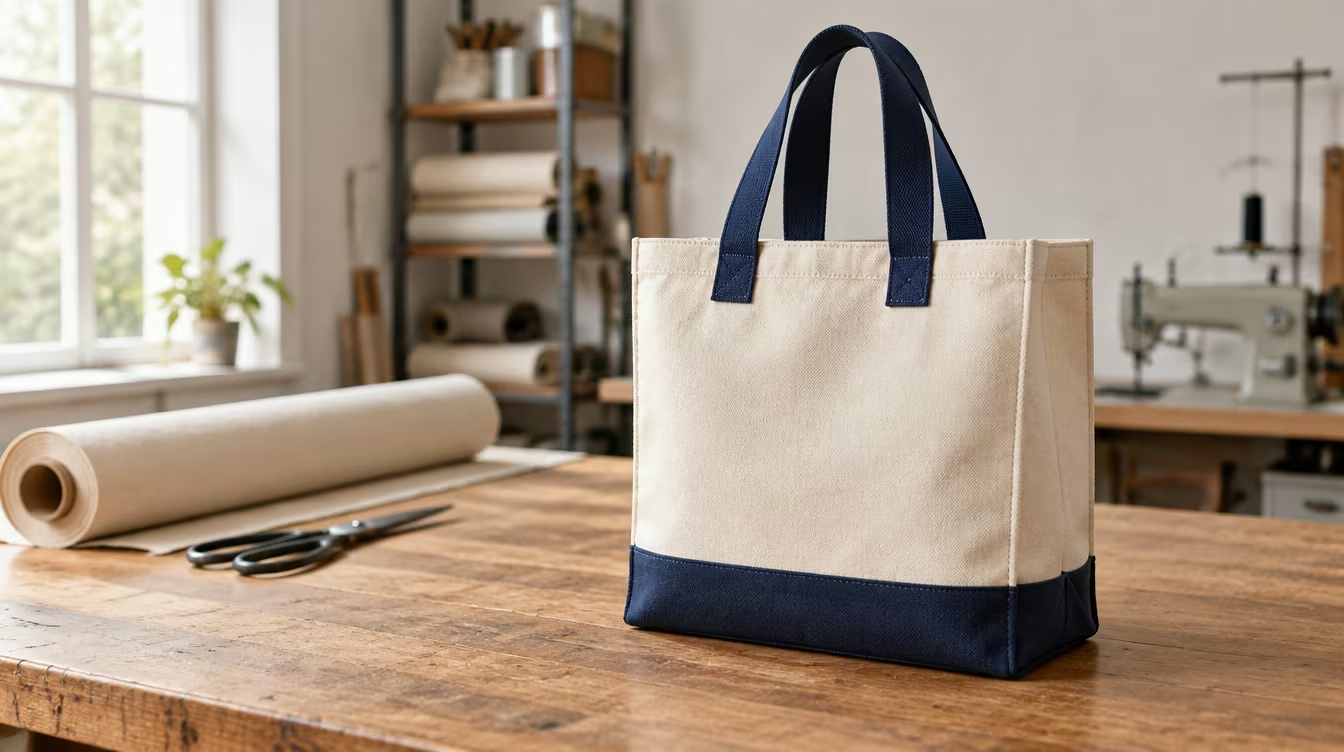
- A reinforced bottom. A second layer of canvas on the base, often in a contrasting colour, adds stiffness and protects the most worn area. A removable base board can be added for bags that must stay perfectly flat.
- Topstitched edges. A line of stitching along the vertical edges of the gusset sharpens the corners and keeps the box shape.
Gusseted canvas models with 12 to 19 cm depth:
Which handles, stitching and closures does a canvas tote need?
A canvas tote that carries weight needs webbing handles, an X box stitch at every handle joint and double stitched seams; closures and pockets are optional.
Handles. Canvas totes usually carry cotton webbing handles or handles folded from the same canvas. Short handles (around 30 to 35 cm drop) are for the hand; long handles (around 55 to 65 cm) go over the shoulder. Many retail totes now have both. A handle in a contrasting colour is an inexpensive way to give the bag character.
Stitching. On a bag meant to carry weight, the handle joint is where failure happens. Ask for a box stitch with a cross through it (X box) at each joint, double stitched side seams and bound inside seams. Binding covers the raw fabric edge inside the bag, which matters for a retail product because customers look inside.
Closures and pockets. A canvas tote can take a zip, a snap button, a magnetic closure or a button, and an inner or outer pocket. An inner pocket with a key clip is a small addition that people notice and value. Each extra adds sewing time, so decide which ones the bag really needs.
Which colours are available for canvas?
Natural canvas has a warm ecru tone and is the most economical. Dyed canvas is available in solid colours; for an exact brand colour, the fabric is dyed to order and the minimum quantity rises. Two-tone designs, such as a natural body with a navy base and navy handles, give a premium look without dyeing the whole bag.
Cotton canvas can shrink when washed hot. If the tote will be laundered often, ask about washing instructions to include on the label, and keep the print away from the seams where shrinkage shows first.
Which printing method is best for canvas?
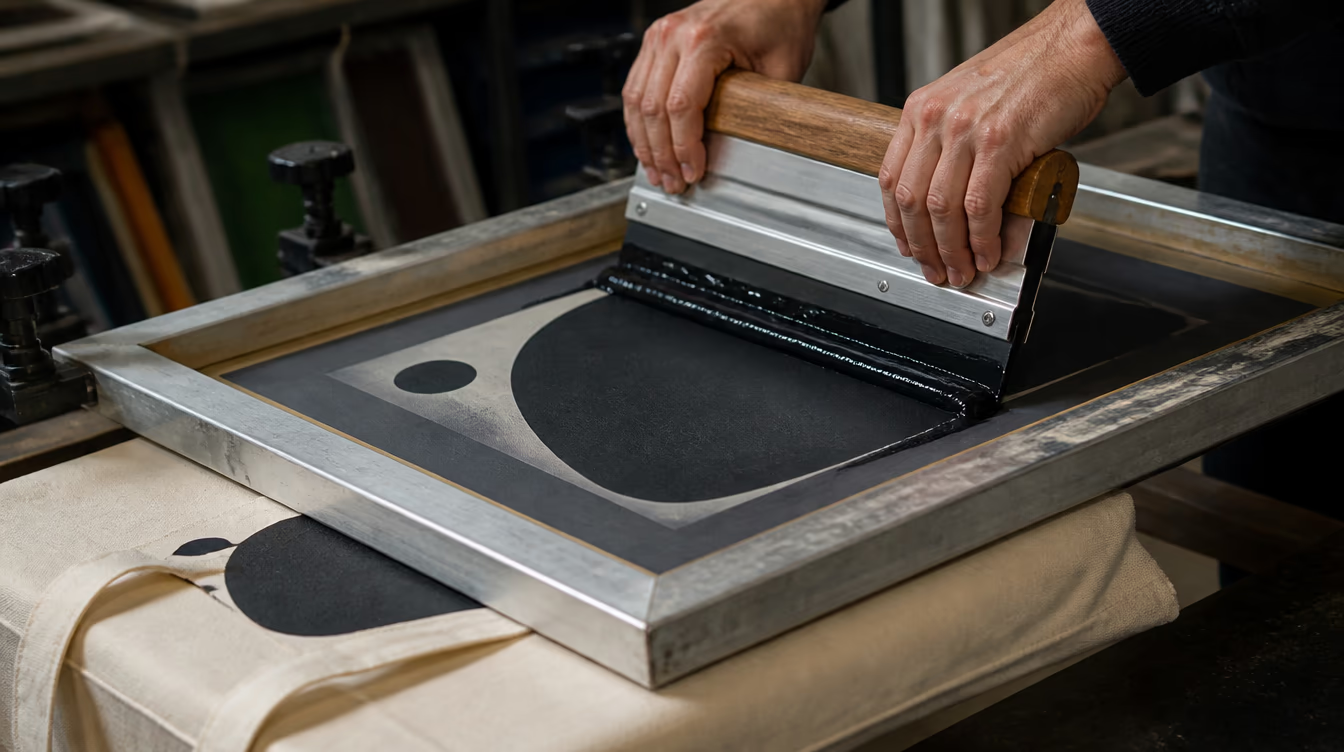
Screen printing is best for one to three colours; transfer or digital printing for full colour artwork. Canvas is an excellent print surface, but its texture affects fine detail.
- Screen printing is the first choice for one to three solid colours. The ink sits well on heavy canvas and lasts.
- Transfer printing handles full colour artwork and fine gradients and works on dark canvas.
- Digital printing suits full colour designs, short runs and artwork that changes from bag to bag.
Artists and brands who want their artwork across the whole face of the bag should ask for the largest possible print area for the chosen size and check that the design keeps clear of the seams and gusset folds. Matte inks keep the natural look of the fabric; glossy finishes can look like a sticker on canvas. Canvas from around 280 g/m² is also firm enough for embroidery without puckering. The printing techniques guide compares the methods in detail.
What is the difference between promotional and retail canvas bags?
The same fabric can make two very different products. A promotional canvas bag is judged on price per piece and print quality. A retail canvas bag, sold under your brand or given as a premium gift, is judged like any other product: consistent dimensions across the order, straight seams, clean inside finish, a care label and packing that arrives without creases. If the bag is for retail, say so in your first message. It changes the stitching, finishing and packing we quote.
Canvas models suited to retail counters and corporate gifts:
What should a canvas tote brief include?
A complete brief gets an accurate quote in one round. Include:
- Quantity, or two or three quantity levels
- Dimensions: width × height × gusset, in centimetres
- Fabric weight in g/m² (or oz/yd²) and colour
- Handle type, length and colour; short, long or both
- Construction: reinforced base, base board, pockets, closure
- Print: method if known, number of colours, print area, one or both sides
- Use: promotional or retail
- Delivery country and target date
Duru Çanta has been producing cotton bags in Istanbul since 2002. Our minimum order for canvas bags is 500 pieces. You can see finished models in the canvas bag range, send your brief through the online quote form, or read about our workshop on the cotton bag production page. If you are still choosing between canvas, raw cotton and gabardine, start with the fabric selection guide.
Frequently asked questions
What is 10 oz canvas in gsm?
About 340 g/m², if the 10 oz is measured per square yard. Multiply ounces by 33.9 to get grams per square metre.
What canvas weight is best for a tote bag?
For most branded totes, 280 to 320 g/m² (about 8 to 9.5 oz). Go lighter for event bags and heavier only for structured or heavy duty bags.
How do you make a canvas tote stand upright?
Combine heavy canvas with side and bottom gussets, a reinforced double base and topstitched gusset edges. A removable base board keeps the bottom perfectly flat.
Is canvas the same as cotton?
Canvas is a type of cotton fabric: a plain weave made with thicker yarns and woven more tightly, which makes it heavier and stronger than ordinary cotton.
Can canvas totes be washed?
Yes, at low temperature and inside out. Cotton canvas may shrink slightly in a hot wash, so hand washing or a cold cycle is best for printed bags.
What is the minimum order for custom canvas totes?
500 pieces. For projects with special construction or a heavier fabric, write to us through the contact page with the details.
What is the difference between canvas and gabardine?
Canvas is plain woven and heavier; gabardine is twill woven with a smoother, finer face. Canvas leads on durability and structure, gabardine on a refined look. See our gabardine bags for comparison.