A raw cotton bag is a tote sewn from undyed, unbleached woven fabric, sold in its natural off white shade. It is the most ordered bag in promotional work because it costs little, takes a screen print cleanly and looks honest. Most of the questions buyers send us are not about whether to choose raw cotton, but about which raw cotton: what the fabric is really made of, which weight to ask for, which size and handle work, and why two quotes for "the same bag" can differ so much. This guide answers those questions in the order they come up in a real order. Short answer on weight: 130 to 140 g/m² for event and promotional bags, 200 g/m² for bags that will be used every day.
Is raw cotton 100% cotton?
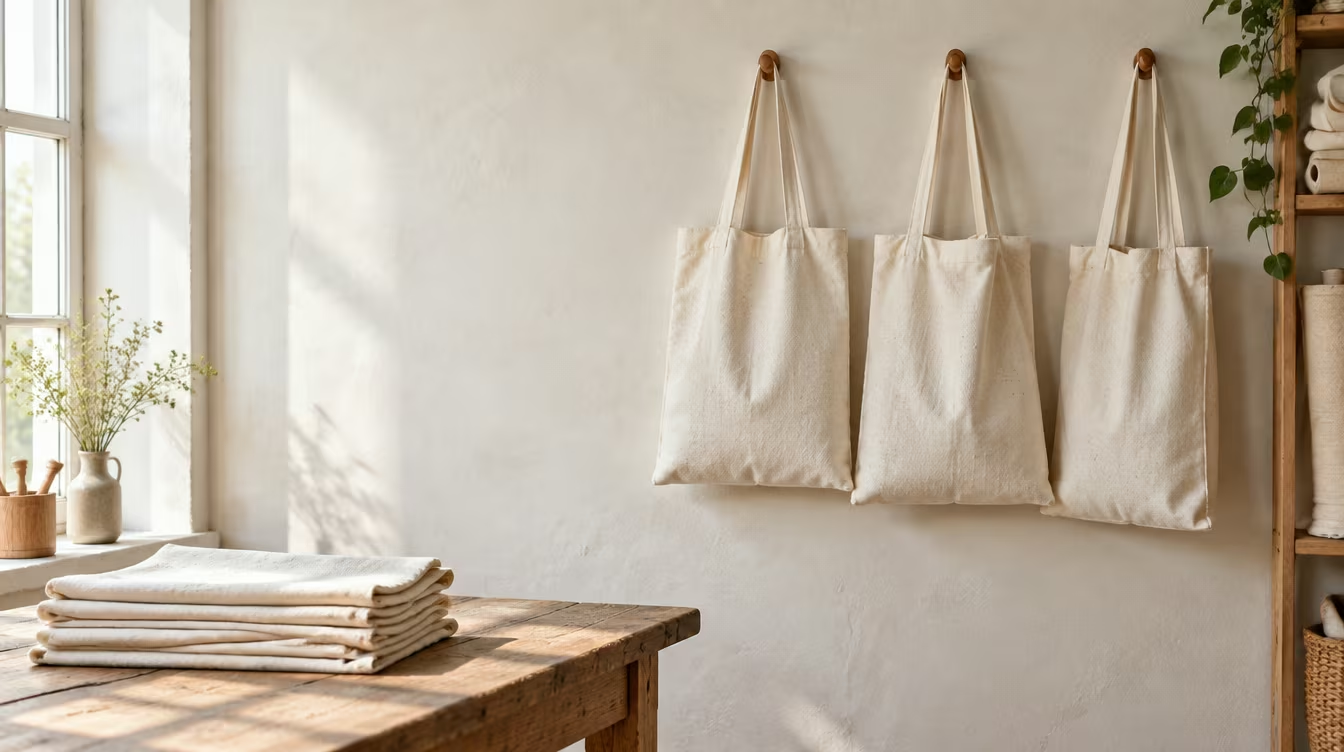
Not always: raw cotton can be pure cotton or a polyester cotton blend. "Raw" describes the finish, not the fibre content. The fabric comes off the loom and goes to cutting without bleaching or dyeing. That is why it has a creamy, slightly uneven tone and, in pure cotton qualities, small dark specks where fragments of the cotton plant stay in the yarn. Those specks are normal and are a sign that the fabric has not been chemically whitened.
The confusion starts with the fibre. In the Turkish market, the word used for raw cotton fabric (ham bez) covers two different materials:
- Polyester cotton blend. The most common economical quality. It wrinkles less, shrinks less in the wash and keeps its shape, but it is not 100% cotton and should not be described as such on your packaging or in a tender.
- 100% cotton. Softer to the touch, more natural in appearance and the right choice when your brief, your client or a sustainability claim requires pure cotton. It can shrink a few percent when washed hot.
If a supplier quotes "raw cotton" without stating the composition, ask. Many tender documents we receive say "100% cotton, 120 to 140 g/m²" while the price expectation is based on a blend. Clarifying this at the first message saves a round of revised quotes.
Which raw cotton fabrics are available?
Raw cotton is the most requested bag on our site: from February to October 2026 it made up more than a third of all products added to quote lists. At Duru Çanta, raw cotton bags are produced from four fabric qualities. The table shows what separates them.
| Quality | Weight | Composition | Look | Best for |
|---|---|---|---|---|
| Raw cotton | 130 g/m² | Polyester cotton blend | Natural off white, smooth | Events, fairs, high quantity giveaways |
| White cotton | 140 g/m² | 100% cotton | Clean white | Briefs that require pure cotton, bright prints |
| Coloured raw cotton | 140 g/m² | Dyed raw cotton | Solid colour | Brand colour matching, campaigns |
| Patiska (rib weave) | 200 g/m² | 100% cotton | Denser, fine rib texture | Bags used every day, heavier contents |
You can see these qualities on finished models in our raw cotton bag range. If you are still deciding between raw cotton, canvas and other fabrics, the fabric selection guide compares all of them side by side.
The raw cotton models added to quote lists most often on our site:
How many grams should a raw cotton bag be?
130 to 140 g/m² is enough for most promotional bags; choose 200 g/m² for bags used every day. Fabric weight is given in grams per square metre (g/m² or gsm). It is the single number that most affects both the price and how the bag feels in the hand.
- 130 to 140 g/m² is the standard for promotional bags. It is light, folds flat in a conference kit and is more than enough for documents, brochures and small purchases.
- 200 g/m² is noticeably firmer. Choose it when the bag will be reused daily, carry books or bottles, or represent a premium brand.
Some buyers specify raw cotton by thread density instead, written as "36 tel" or "42 tel" in Turkish trade. Higher numbers mean the yarns are packed more tightly and the fabric looks less open against the light. Density and weight are related but not interchangeable, so the most reliable way to compare two offers is to ask for the weight in g/m² and to hold both samples up to a window. An open weave shows light through it immediately.
A note on coated raw cotton: some specifications add a thin nonwoven layer laminated to the back of the fabric to make the bag stand stiffer. It changes the feel completely and the bag should no longer go in a washing machine. Ask for it only when stiffness matters more than washability.
What size should a raw cotton bag be?
35 × 40 cm is the standard size and suits most uses. Our raw cotton bags are made from 25 × 30 cm up to 50 × 40 cm, and custom dimensions are possible. The sizes that cover most needs:
| Size | Typical use |
|---|---|
| 25 × 30 cm | Small gifts, pharmacy and cosmetics, children's events |
| 30 × 35 cm | Book fairs, small retail purchases |
| 35 × 40 cm | The standard. Fits A4 documents and a conference programme |
| 38 × 42 cm | Shopping, A4 folders with extra room |
| 40 × 45 cm and up | Groceries, beach and sports use, bulky items |
35 × 40 cm is the size we are asked for most often, and it appears in almost every tender we receive. If you are unsure, start there. Width matters more than people expect: a bag narrower than an A4 folder (21 × 30 cm) plus a few centimetres of seam allowance will not take documents flat.
Models in the sizes above, from book fairs to the beach:
Which handles and stitching should you choose?
For everyday use, choose long handles and double stitched handle joints; for single use event bags, short handles cut from the same fabric and economy stitching are enough.
Handle length. Short handles are carried in the hand. Long handles, usually around 60 to 70 cm, let the bag go over the shoulder, which is what most people expect from a tote today. Long handles add a little fabric and cost, but they change how often the bag is actually used.
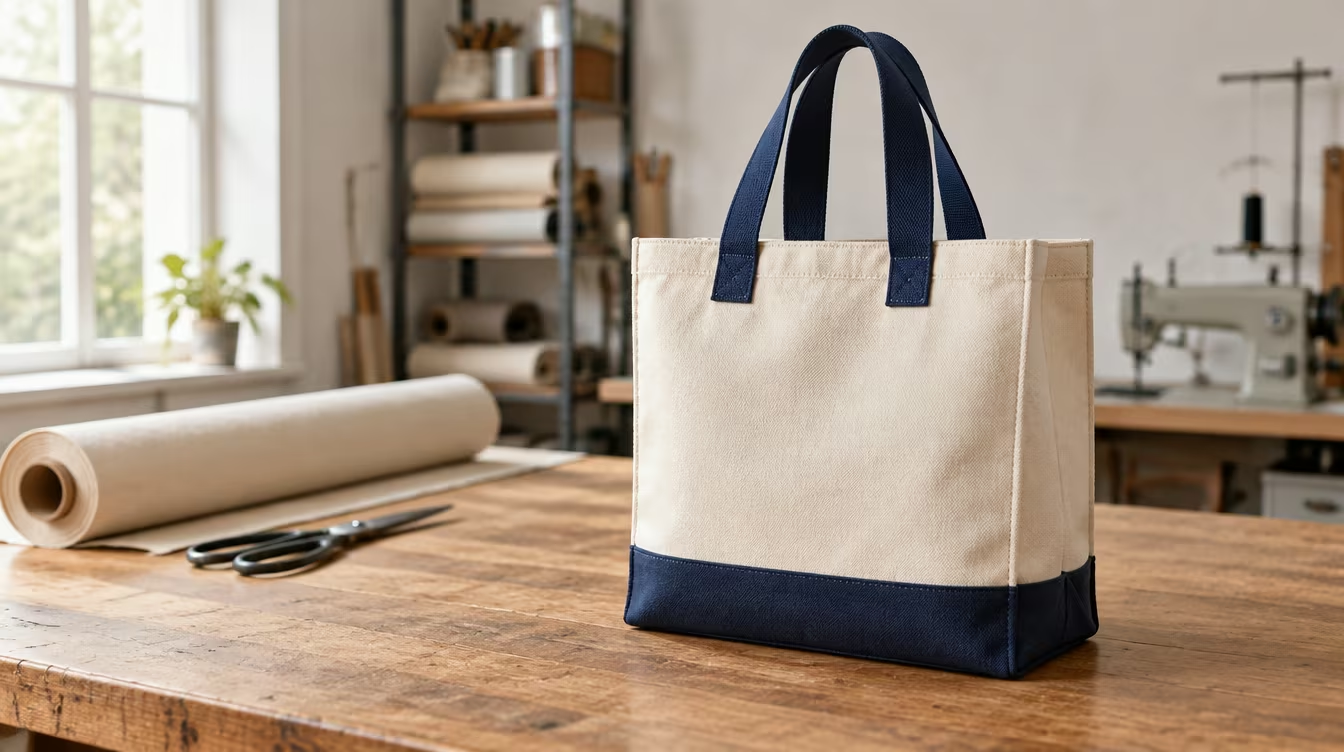
Handle type. The economical option cuts the handles from the same fabric as the body. Cotton webbing handles are stronger, keep a neat edge and can be ordered in a contrasting colour. A coloured handle on a natural body is one of the cheapest ways to make a raw cotton bag look designed.
Gussets. A flat bag has no gusset and is the lowest cost. A bottom gusset gives the bag a base so it stands and holds boxes or bottles. Side and bottom gussets together turn it into a shopping bag with real volume.
Stitching. Economy stitching is fine for single use event bags. A clean finish with enclosed seams looks better inside the bag and survives washing. Double stitching or a cross stitch at the handle joints is the detail to insist on if the bag will carry weight; handles rarely tear, the joint does.
Which printing method suits raw cotton?
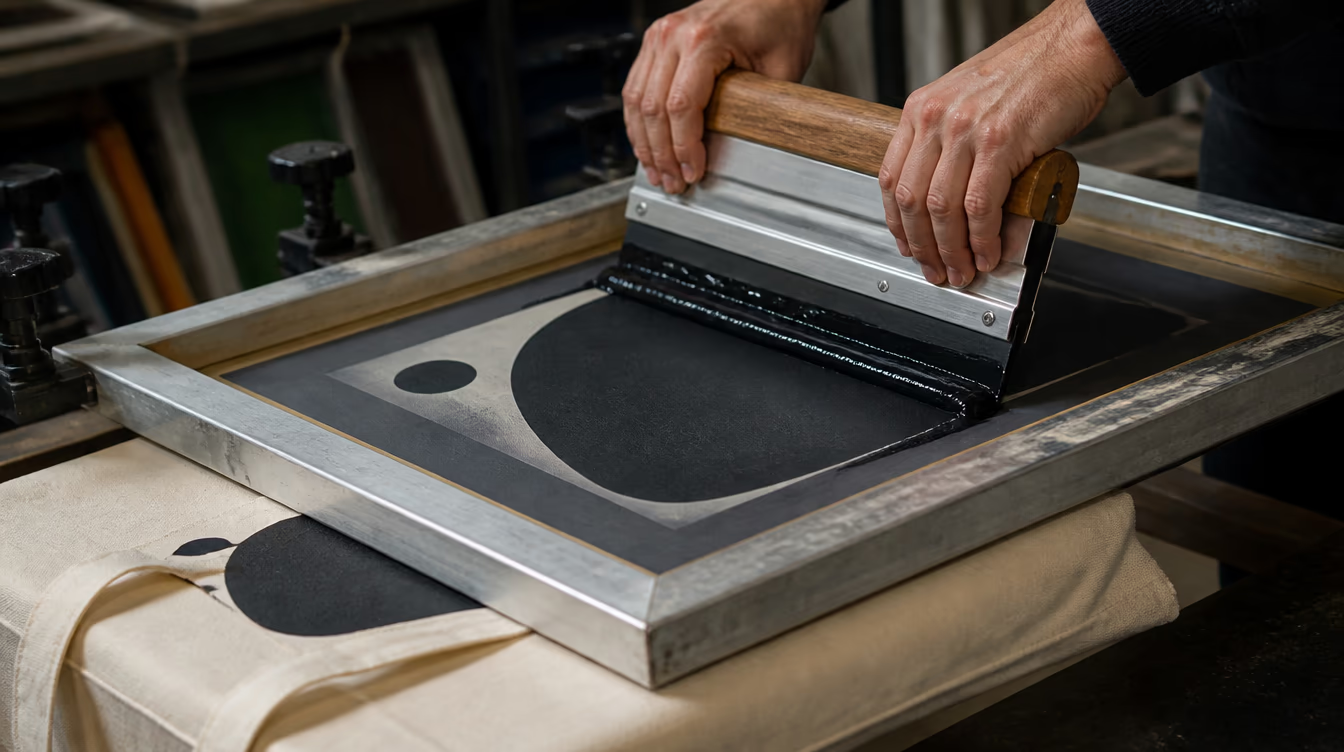
Raw cotton is one of the best surfaces for screen printing. One or two colours print sharp and the ink sinks into the weave, so it lasts through washing. For logos with many colours or photographs, transfer or digital printing is used instead.
Two things to plan for:
- The natural base is warm, not white. Light colours such as pale yellow or light grey lose contrast on it. Dark colours and black look excellent.
- The specks in pure cotton raw fabric stay visible around a print. If your design needs a perfectly clean background, choose the white cotton quality.
The printing techniques guide covers each method, its limits and how print size affects price.
What determines raw cotton bag prices?
Six things set the price: fabric, size, handles, gussets, print and quantity. Two quotes for "a raw cotton bag, 35 × 40, printed" can be far apart because the phrase leaves out most of the cost. The price is built from:
- Fabric quality and weight (blend or pure cotton, 130 or 200 g/m²)
- Size, which sets fabric consumption and cutting waste
- Handle length and type
- Gussets and stitching level
- Number of print colours and whether both sides are printed
- Quantity
When you compare offers, compare them line by line on these six points. Our article on what determines cotton bag cost explains how each one moves the unit price and why quantity breaks matter so much.
How do you brief a raw cotton bag order?
The quickest quotes come from briefs that answer these points in one message:
- Quantity, or two or three quantity levels if you are still deciding
- Size in centimetres
- Composition: blend acceptable, or 100% cotton required
- Weight, if you have a preference
- Handle length and whether the handle should be a different colour
- Gusset or flat
- Logo file and number of colours, one side or both
- Delivery date and delivery address
Duru Çanta has been producing cotton bags in Istanbul since 2002. Our minimum order for raw cotton bags is 500 pieces. You can send the brief through the online quote form, or read how our production works on the cotton bag production page first.
Frequently asked questions
Is raw cotton the same as 100% cotton?
Not necessarily. "Raw" refers to the undyed, unbleached finish. The fabric can be pure cotton or a polyester cotton blend. Always check the composition on the quote.
Why are there small dark dots in the fabric?
In pure cotton raw fabric, tiny fragments of the cotton plant remain in the yarn because the fabric is not bleached. They are a natural feature, not a defect.
Can raw cotton bags be washed?
Yes. Wash at low temperature and inside out to protect the print. Pure cotton can shrink slightly in a hot wash; blends shrink less. Coated or laminated versions should not be machine washed.
Which weight should I choose for a conference bag?
130 to 140 g/m² is enough for documents and a programme. Choose 200 g/m² if the bag is meant to be kept and used daily after the event.
Can I get raw cotton in my brand colour?
Yes, with the coloured raw cotton quality. Dyed fabric costs more than natural, and an exact colour match may require a higher quantity.
What is the difference between raw cotton and canvas?
Canvas is a heavier, more tightly woven cotton, usually from around 220 g/m² upwards. It is stiffer and more durable, and costs more. Raw cotton is lighter and the economical choice for promotional quantities. The canvas tote guide covers canvas weights in detail.
Can raw cotton be made into drawstring pouches?
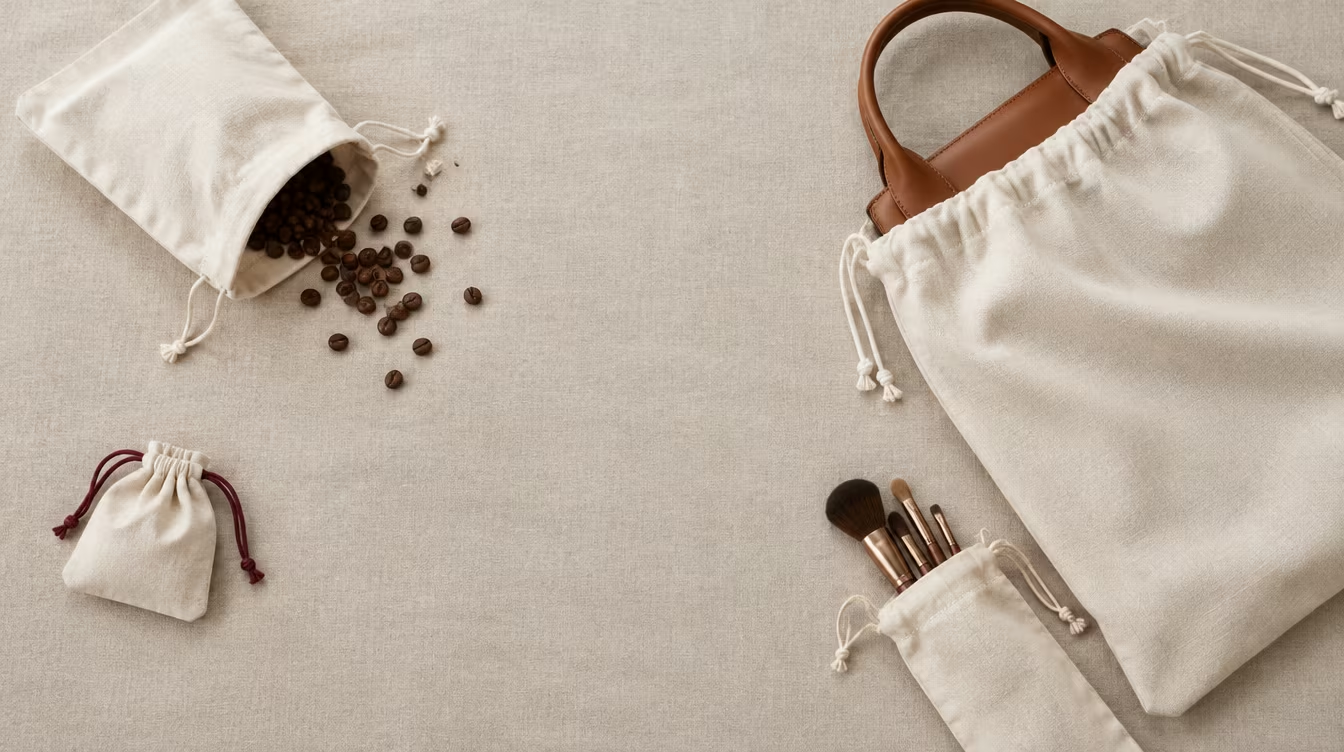
Yes. Raw cotton is the most common fabric for drawstring pouches and dust bags, with a lower minimum order than bags. See the drawstring pouch guide.
What is the minimum order?
500 pieces for raw cotton bags. Smaller test runs can be discussed for custom projects through the contact page.