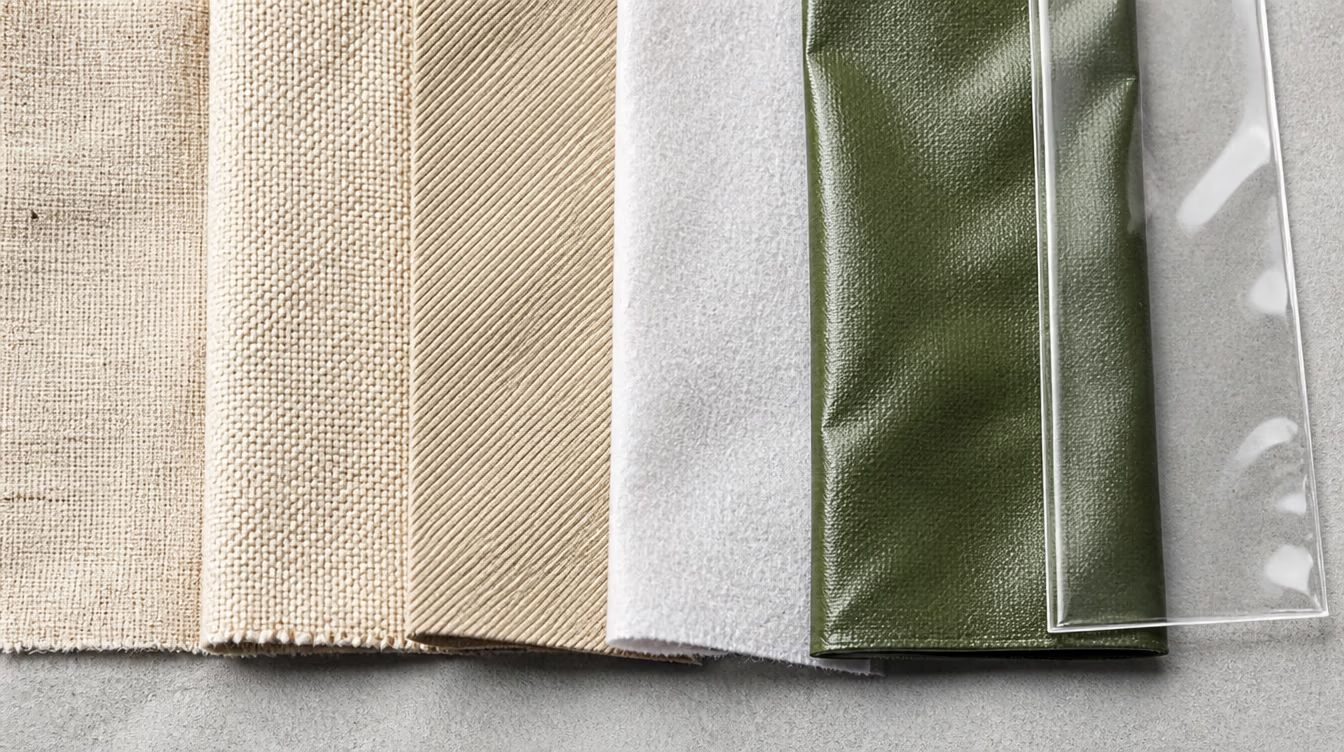
The first decision on a cloth bag is not colour or size, it is fabric. Fabric sets the price, the lifespan, how the print sits and how many kilos the bag will carry, all at once. This guide puts the six materials used in the trade side by side and answers the question "which should I choose" through the use case rather than through marketing language.
Quick comparison
| Fabric | Structure | Typical weight | Load strength | Print fit | Washable | Relative cost |
|---|---|---|---|---|---|---|
| Raw cotton | Woven cotton, undyed | 120 - 220 g | Medium | Very good | Yes | Low - medium |
| Canvas | Densely woven cotton | 240 - 320 g | High | Very good | Yes | High |
| Gabardine | Diagonal twill weave | 200 - 260 g | Medium - high | Good | Yes | Medium |
| Nonwoven | Pressed polypropylene | 60 - 100 g | Low - medium | Medium | No | Very low |
| Impertex | Coated, water resistant | Depends on coating | High | Good | Wipe clean | Medium - high |
| PVC | Clear or coloured plastic | Measured in microns | Medium | Limited | Wipe clean | Medium |
Raw cotton
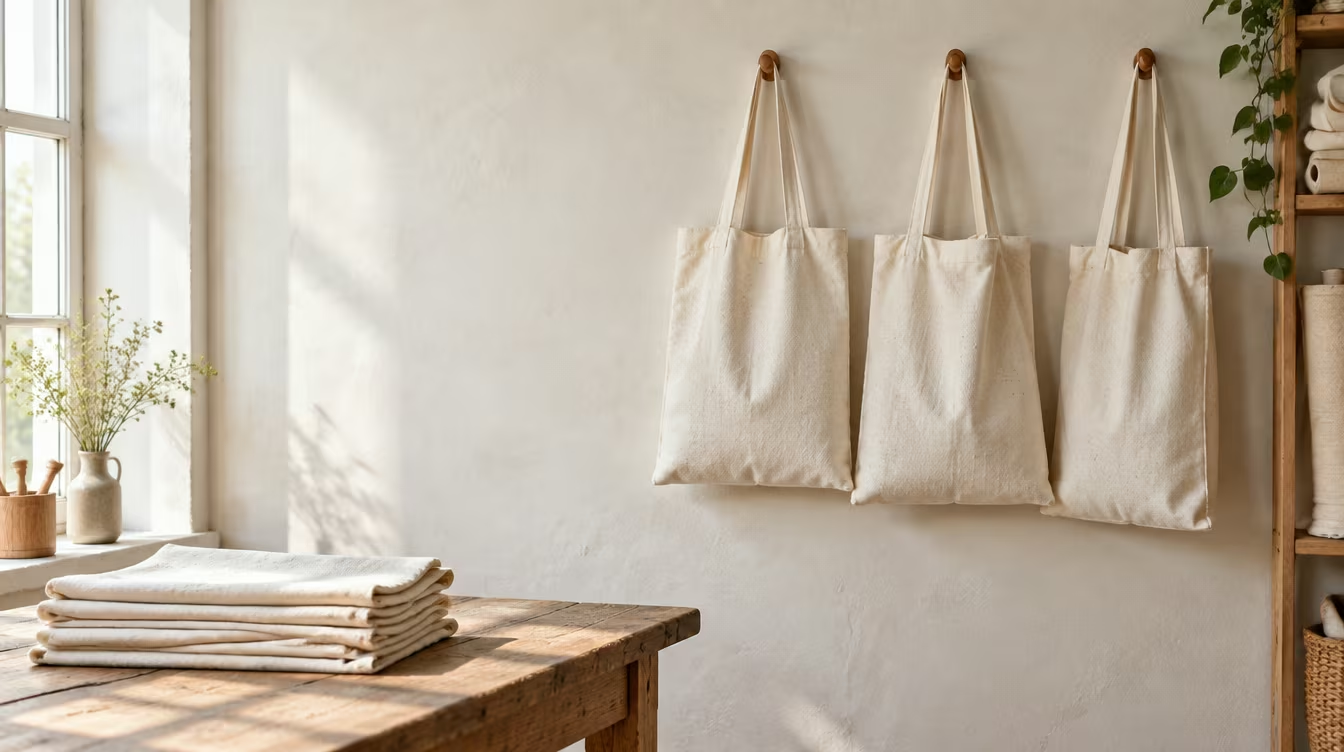
Raw cotton is undyed, unfinished woven cotton. Its characteristic off white shade, natural look and matt surface that holds ink well make it the most common material for promotional bags.
Strength: The balance between cost and print quality. A single colour screen print comes out sharp and clean on raw cotton.
Weakness: Because it is undyed, colour options are limited. At low weights the weave looks open when held to the light.
Where it is the right choice: Trade shows, book fairs, festivals, school events, corporate awareness campaigns. You can review raw cotton bag models by weight.
Canvas
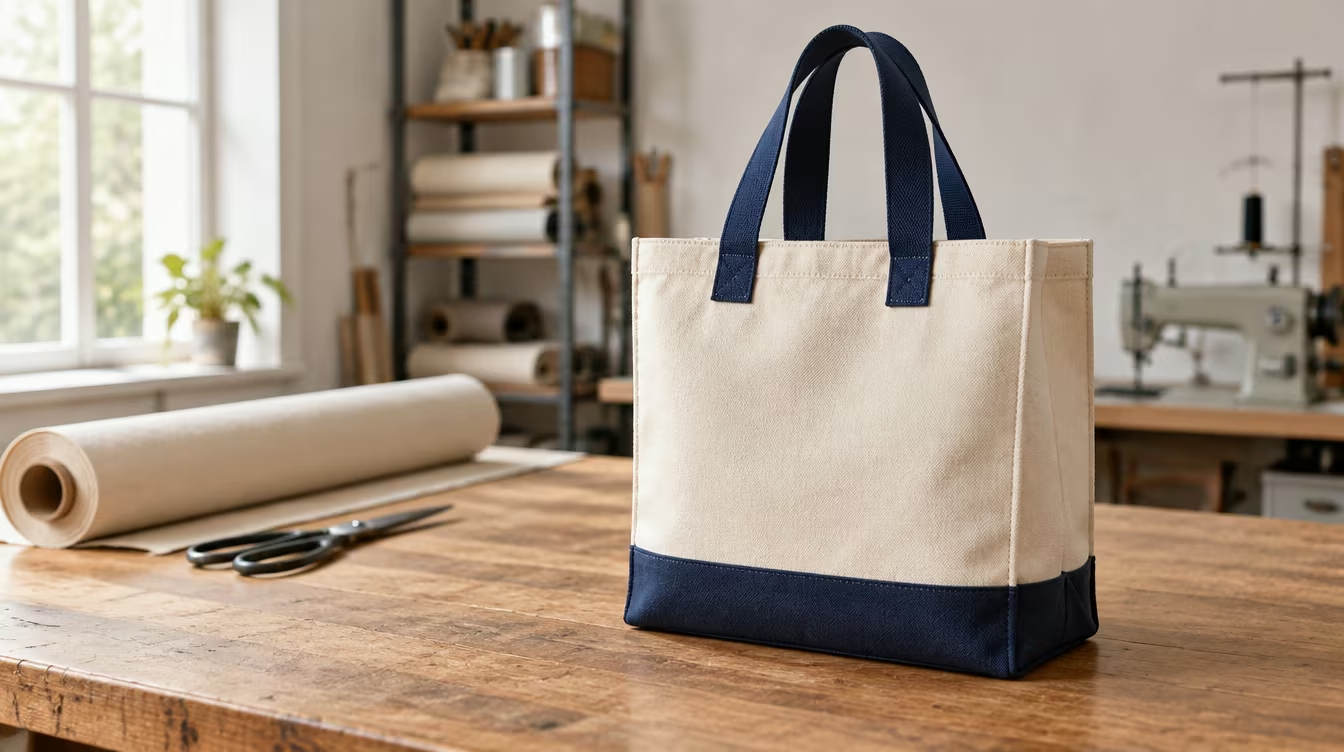
Canvas is raw cotton woven more densely and made heavier. Its face and reverse are identical, which makes it suitable for reversible use.
Strength: Durability. A 300 gram canvas bag is a product that lasts for years and holds its shape when full.
Weakness: Cost. It is clearly more expensive and heavier than a raw cotton bag of the same size.
Where it is the right choice: Retail carriers, bookshops, grocery shopping, corporate gifts, long life brand carriers. Models are in the canvas bag category.
Gabardine
Gabardine is distinguished by its diagonal twill structure. That weave gives the fabric a slight sheen and a better drape than a plain weave.
Strength: Visual quality. In corporate gift sets it reads as more finished than raw cotton, and the colour range is wide.
Weakness: Very fine line artwork may not sit as crisply on a diagonal weave as it does on a plain one.
Where it is the right choice: Corporate gifts, dealer meetings, guest gifts, colour led collections. See the gabardine bag models.
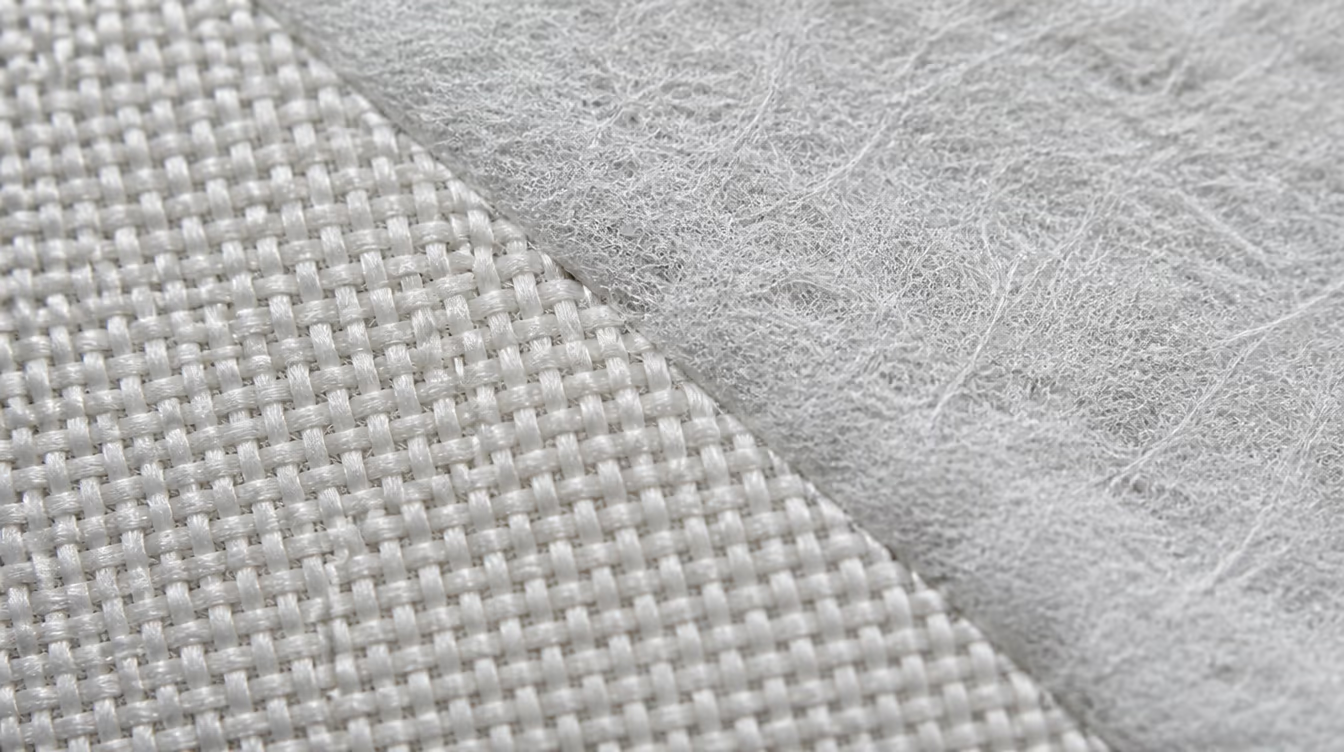
Nonwoven
What does nonwoven mean?
The word means exactly what it says: not woven. Nonwoven is not a fabric type but a production method. Polypropylene fibres are bonded to each other with heat and pressure instead of being woven. The result behaves like a fabric surface but has no yarn or weave structure.
Strength: Cost and lightness. For high volume distribution it is the lowest unit cost option, and because it welds easily, production is fast.
Weakness: Lifespan. It is not washable, it is sensitive to abrasion and it degrades if left in sunlight for long. Under heavy loads it can tear at the seams.
Where it is the right choice: Carrier bag alternatives, one off event distribution, product sleeves, footwear and textile packaging. Have a look at the nonwoven bag models.
A point that is often confused: nonwoven is not paper like, it is plastic based, and it should not be judged in the same category as cotton fabrics. In an environmental comparison the deciding factor is number of uses. A cotton bag pulls ahead once it has been used hundreds of times, and not before.
Impertex
Impertex is a technical fabric coated to make it water resistant. Its surface has a slight sheen and a smooth hand.
Strength: Water resistance and easy cleaning. A wet surface wipes clean without marking.
Weakness: It does not breathe. Damp contents leave moisture inside. The coating can also limit some printing techniques.
Where it is the right choice: Backpacks, sports bags, beach bags, outdoor events, wet season distribution. Models are in the impertex bag category.
PVC
PVC is a non woven plastic sheet, mostly used clear or semi transparent.
Strength: It shows what is inside. In cosmetics, stationery and organiser products, seeing the contents makes the buying decision easier. It is also completely liquid proof.
Weakness: Printing is limited, it stiffens and can crack in low temperatures, and a fold leaves a permanent mark.
Where it is the right choice: Cosmetic bags, makeup pouches, pencil cases, travel organisers, stadium and concert entry bags. Products sit in the PVC category.
Ultrasonic bonding and woven polypropylene
Two further structures belong to the nonwoven family and both are frequently confused with it.
Ultrasonic bags
The nonwoven surface is joined by ultrasonic sound waves instead of stitching. The edges fuse and no thread is used. Production is very fast and the cost drops further.
Strength: The lowest unit cost and the fastest production, preferred for high volume single use distribution.
Weakness: A welded line is more brittle than a stitched one and can open under load. Ultrasonic bag models sit in their own category.
Woven polypropylene
Polypropylene tapes that really are woven. It comes from the same raw material as nonwoven, but the woven structure makes it noticeably more durable.
Where it is the right choice: Grocery carriers meant for heavy loads, and full surface printed jobs where a laminated gloss finish is wanted.
Fabric documentation and certification
In corporate procurement and in export, the paperwork behind the fabric matters as much as the fabric. Three documents are commonly requested:
- Harmful substance testing: a test report confirming the fabric carries no chemicals harmful to health. Requested for children's products and food contact use.
- Organic cotton certification: confirms the cotton comes from certified organic production. It strengthens communication in environmental campaigns but raises both cost and recommended quantity.
- Recycled content declaration: states the share of recycled fibre in the fabric.
If you need documentation, say so in the first conversation. Certified fabric comes through a separate supply chain and paperwork cannot be added once production has started.
Choosing by use case
| Scenario | Suggested fabric | Why |
|---|---|---|
| Handing out thousands at a trade show | Raw cotton 140-160 g or nonwoven | Unit cost and ease of transport |
| Retail shopping bag | Canvas 280-320 g | Heavy loads and long life |
| Corporate gift set | Gabardine 220-240 g | Visual quality and colour choice |
| Gym and outdoor | Impertex | Water resistance, wipe clean |
| Cosmetics and organising | PVC | Visible contents, liquid proof |
| Food packaging support | Nonwoven or raw cotton | Light weight and cost |
| Books and heavy goods | Canvas or heavy raw cotton | Tear resistance |
| Seed and environmental campaigns | Raw cotton | Natural look, all cotton construction |
For the seed pocket application used in environmental campaigns, see the seed embedded bag page.
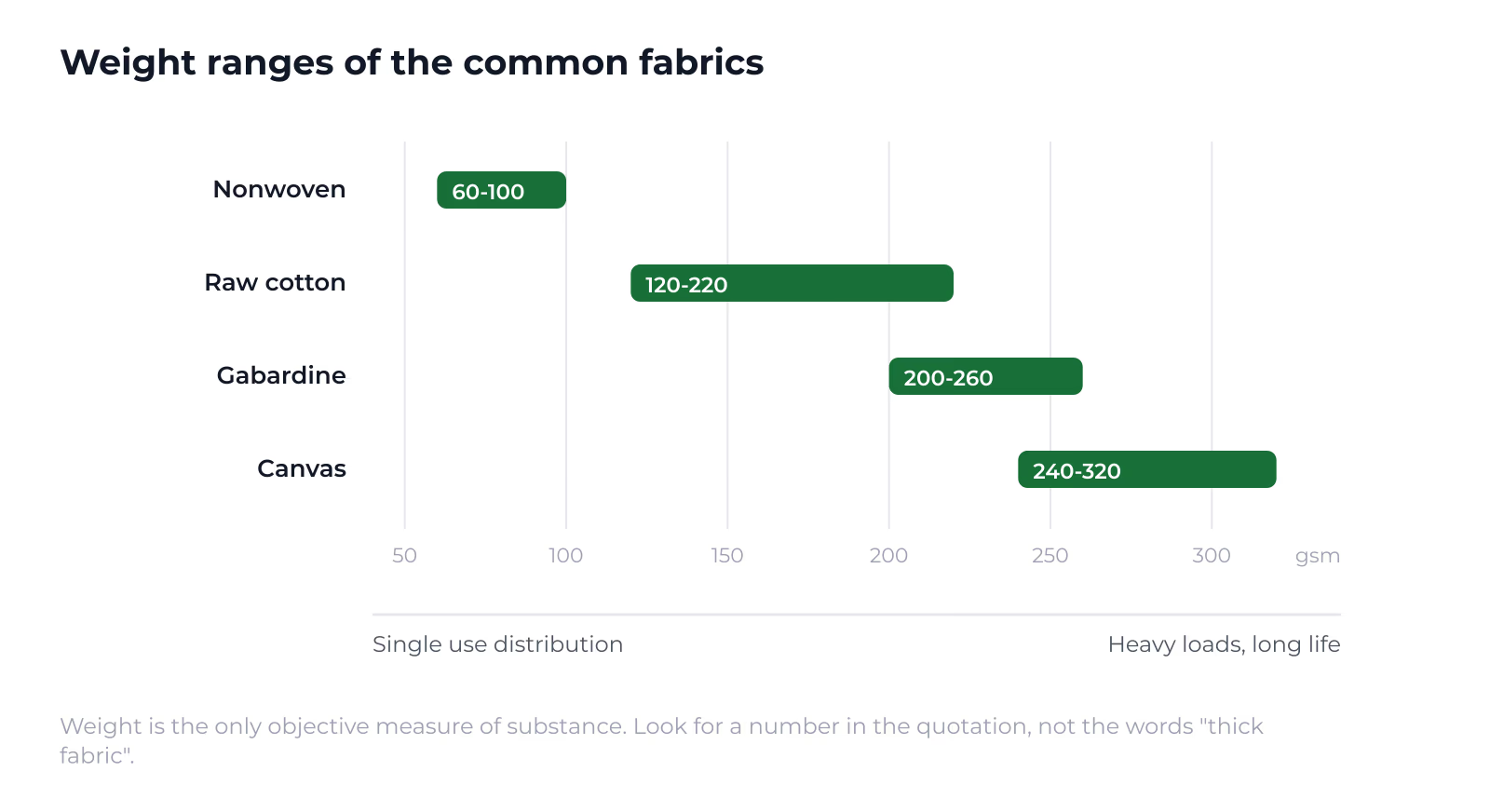
How to read fabric weight
Weight is grams per square metre and it is the only objective measure of substance. "Thick fabric" is not a measurement; look for a number in the quotation.
- 120 - 140 g: Light and economical, enough for single use distribution.
- 150 - 180 g: The most common range for promotional bags, suitable for light daily use.
- 200 - 240 g: Regular use and medium loads.
- 260 - 320 g: Heavy loads, long life, a body that keeps its shape.
The effect of weight on cost is linear, since fabric makes up close to half the total. Details are in our cost breakdown.
Fabric and print technique compatibility
| Fabric | Screen | Digital / DTF | Transfer | Embroidery |
|---|---|---|---|---|
| Raw cotton | Excellent | Suitable | Suitable | Suitable |
| Canvas | Excellent | Suitable | Suitable | Excellent |
| Gabardine | Suitable | Suitable | Suitable | Excellent |
| Nonwoven | Suitable | Limited | Limited | Not suitable |
| Impertex | Suitable | Limited | Suitable | Limited |
| PVC | Limited | Not suitable | Suitable | Not suitable |
Durability and cost differences between techniques are covered in our printing techniques guide.
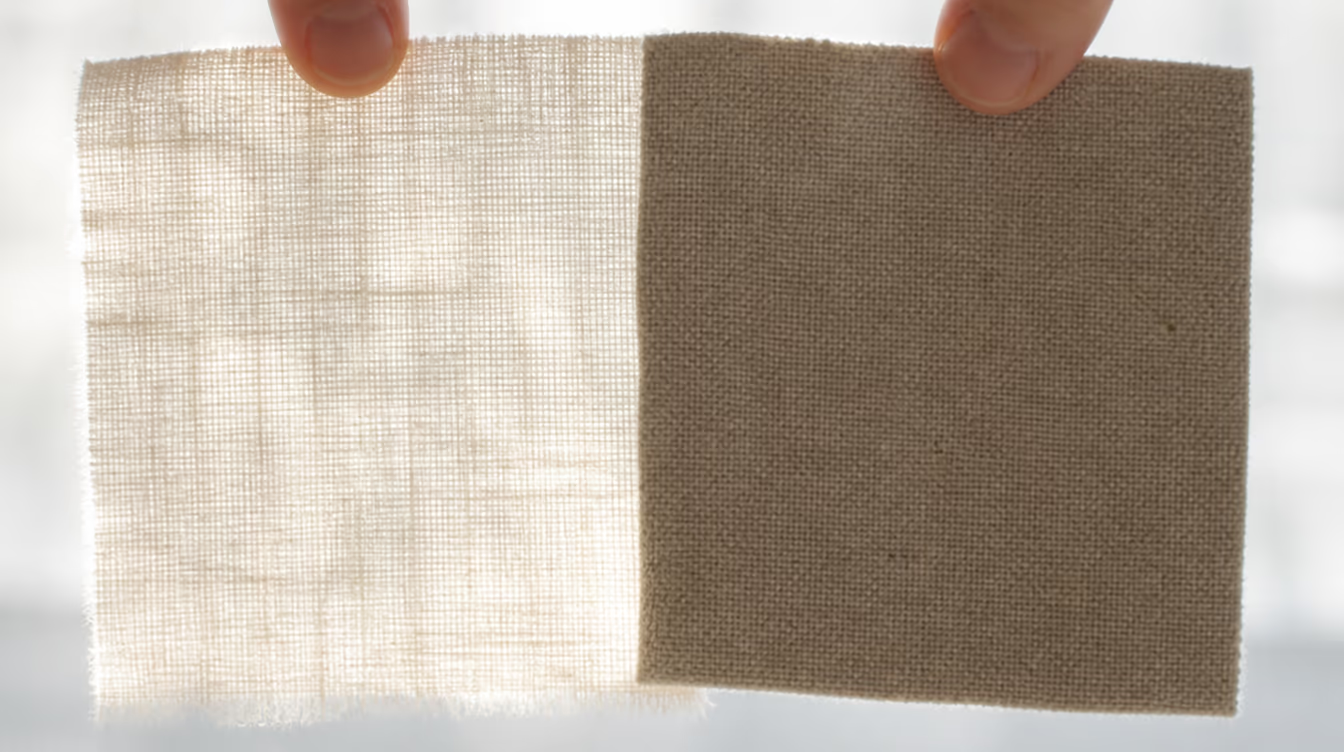
How to assess a fabric sample yourself
When a sample reaches you, four checks can be made without a laboratory.
Light test
Hold the fabric up to daylight. How much light passes through gives a quick sense of the weight. If a fabric quoted at 160 grams passes light like a 120 gram cloth, the number and the product do not match.
Weave density
Look at one square centimetre. Dense, regular yarns indicate a good weave. Sparse and irregular structure leads both to print spread and to stretching under load.
Stretch test
Pull the fabric diagonally with both hands. If it deforms permanently, the weave is loose and the bag will lose its shape once filled.
Rub test
Rub the coloured fabric against white paper. If colour transfers, the dye is not properly fixed and the bag will fade or stain other items in the first wash.
Frequently asked questions
Should I choose canvas or raw cotton?
Decide by how many times the bag will be used. For a single event raw cotton is enough and clearly cheaper. If you want a bag the user will carry for months, canvas is the right choice.
Is a nonwoven bag environmentally friendly?
Nonwoven is polypropylene based, which puts it in the plastics family. It lasts longer than a single use carrier but does not replace a cotton bag. In an environmental comparison, what decides is not the material but how many times the bag is used.
Which fabrics are washable?
Raw cotton, canvas and gabardine can be washed. Nonwoven cannot, while impertex and PVC are wiped with a damp cloth.
Is a genuinely waterproof cloth bag possible?
Cotton passes water by nature. Where waterproofing is required, impertex or another coated fabric is used. A water repellent finish applied afterwards to cotton gives limited and temporary protection.
What is the difference between gabardine and canvas?
Canvas is plain woven and heavier, gabardine is twill woven with a smoother face. Canvas leads on durability, gabardine on appearance.
Does fabric colour affect cost?
Yes. Raw cotton is undyed and therefore the most economical option. A custom colour requiring batch dyeing raises both cost and recommended quantity.
Does lowering the weight make the bag useless?
Not if it matches the use case. For a one day event, 140 grams is entirely sufficient. The problem is using a low weight on a bag that has to carry heavy loads.
If you are unsure which fabric suits your own use, get in touch through our production page with dimensions and quantity and we will compare options on a physical sample. To write directly, use the contact page.