When someone asks the price of a cotton bag, the single number they receive is really the sum of seven separate cost lines. A buyer who does not know those lines cannot compare two quotations, because the gap between them usually comes from fabric weight or print colours rather than from margin. This article sets out how the cost of a cotton bag is built, how much each line carries, and how to bring the price down without giving up quality.
The seven cost lines
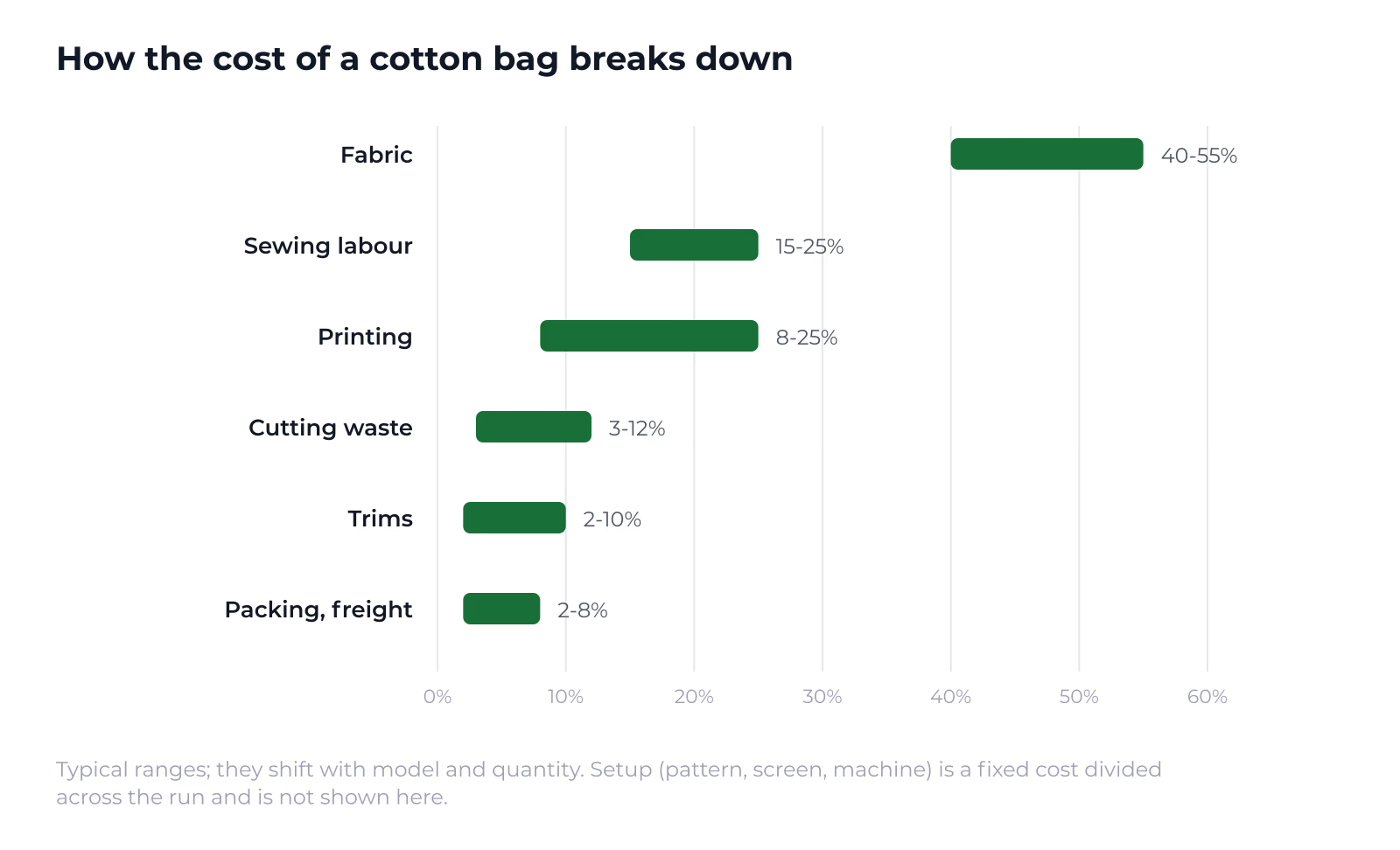
On a standard printed cotton bag the cost breaks down roughly as follows. The percentages shift with the model and the quantity, but the order almost never changes.
| Line | Share of total | Driven by |
|---|---|---|
| Fabric | 40% - 55% | Weight, type, roll width, colour |
| Sewing labour | 15% - 25% | Model complexity, gusset, pocket, zip |
| Printing | 8% - 25% | Technique, colour count, print area, number of sides |
| Trims | 2% - 10% | Zip, snap, cord, metal hardware |
| Cutting waste | 3% - 12% | How the dimensions fit the roll width |
| Setup (pattern, screen, machine) | Fixed | Divided across the run, so quantity sets the unit price |
| Packing and freight | 2% - 8% | Carton volume, distance, whether it folds |
The key figure here is this: close to half the cost is fabric. So when you see a price clearly below the market, the difference has almost always come out of fabric weight. For a comparison of materials on price and durability, see our fabric selection guide.
Fabric weight: the single number that moves the price most
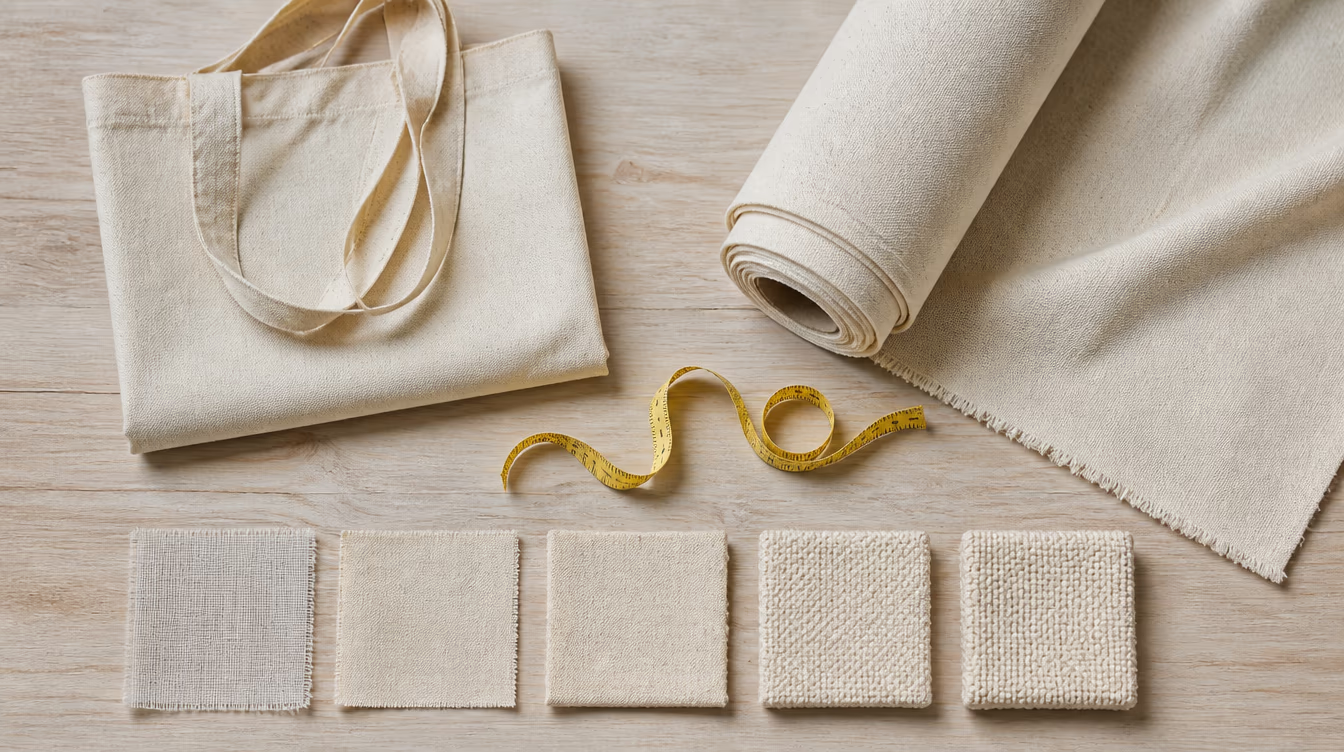
Weight is grams per square metre and it multiplies directly with fabric consumption. On the same model, adding 30 grams raises the fabric cost by roughly the same proportion.
| Fabric | Typical weight range | Where it is enough |
|---|---|---|
| Raw cotton | 120 - 220 g | Trade shows, events, light carrying |
| Gabardine | 200 - 260 g | Corporate gifts, regular use |
| Canvas | 240 - 320 g | Heavy loads, long life, retail carrier |
| Nonwoven | 60 - 100 g | High volume distribution, short use |
A common mistake is to ask for the heaviest fabric for every job. Choosing 300 gram canvas for a one day trade show doubles the cost and gives the user unnecessary weight to carry. The right question is not "which is thickest" but "how many times and with what load will this bag be used".
Why quantity breaks matter so much
Pattern making, pulling a screen, setting the machine and running a first test print are fixed costs. Divided across 200 units they place a real burden on each piece; divided across 5,000 they are almost invisible.
Typical break points in the trade are:
- Up to 250 units: setup cost is a visible share of the unit price.
- 500 to 1,000 units: the setup share falls quickly and the most noticeable reduction happens here.
- 3,000 units: fabric starts to be bought by the roll, adding a further saving.
- 5,000 units and above: fabric can be woven or dyed to order, so colour and weight become free choices.
This is why a buyer thinking about 800 units should also ask for a price at 1,000. Those extra 200 units often come at almost no increase in total spend. To see the step that matches your own quantity, use the quote form.
Cutting waste: the line you never see in a quotation
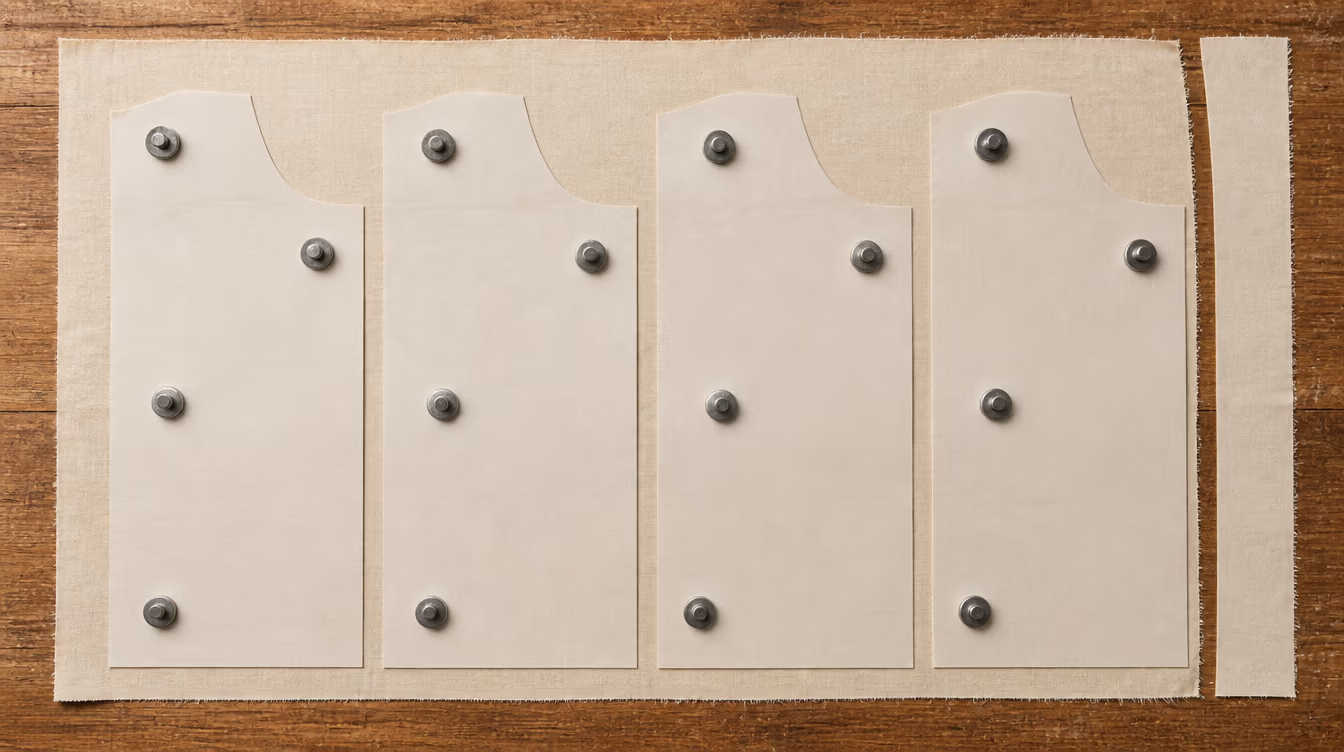
Fabric arrives in rolls at a fixed width. Common widths are 100, 150 and 220 centimetres. If the bag dimension does not sit neatly inside that width, the leftover strip on every cut becomes waste.
A concrete example: cutting a 35 centimetre wide panel from a 150 centimetre roll gives four panels across with 10 centimetres left over, which is about seven per cent waste. Take the same bag to 37 centimetres and you still get four panels across, but the leftover drops to 2 centimetres and waste falls to about one per cent. The bag grew by two centimetres and the cost went down.
A manufacturer who can run that calculation will suggest a dimension. One who accepts your dimension without question is passing the waste into the price. The other questions worth asking are collected in our manufacturer selection guide.
How printing affects cost
Printing is the most volatile line, because a single choice can double it.
| Choice | Effect on cost | Note |
|---|---|---|
| Single colour screen print | Lowest | Unit cost falls sharply at volume |
| Each additional colour | Clear increase | Every colour means another screen and another pass |
| Printing both sides | Roughly doubles the print cost | One side is enough for most campaigns |
| Gradients and photographic artwork | High | Requires a digital technique instead of screen |
| Larger print area | Moderate | More ink and longer curing |
A practical saving: if your logo has three colours, having a single colour version prepared usually halves the print cost without weakening the visual effect. Technique and fabric compatibility is compared in our printing techniques guide.
Model complexity and sewing time
Sewing cost follows time at the machine directly. Each of the additions below adds time.
- Gusset: side and base gussets mean four extra seam lines. They add capacity and moderate cost.
- Pocket: one more panel to cut and one more seam to sew.
- Zip: both a trim and labour, one of the most expensive additions.
- Drawcord: requires a channel seam and threading labour.
- Lining: adds almost the cost of a second bag.
- Long shoulder handles: more fabric and more stitching than short hand handles.
Every one of these serves a purpose, but it is easily forgotten that not every purpose needs them all. On a bag handed out at a trade show, a lining is a cost nobody will use.
The costs that stay hidden
Four lines are routinely missed when quotations are compared:
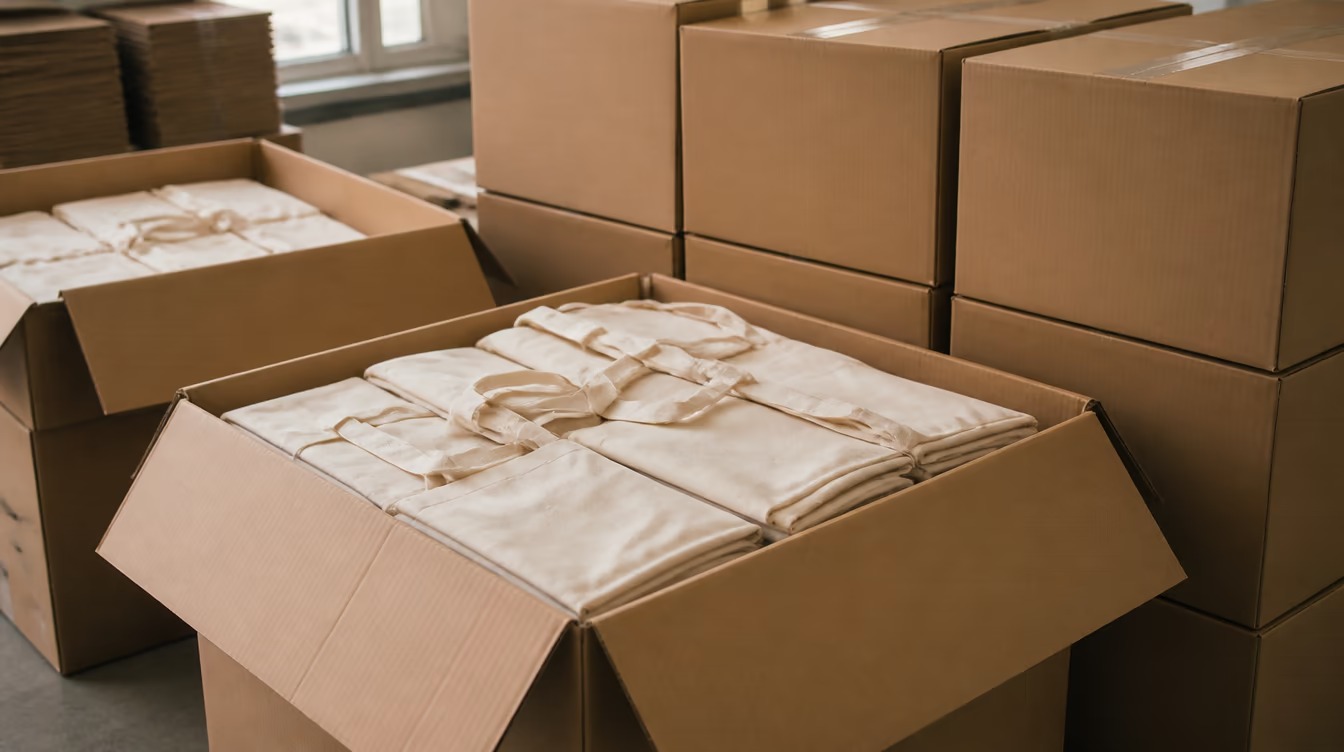
Carton volume and freight
Foldable models take up around a third of the space in a carton. On long distance shipping that difference can wipe out a small advantage in unit price. The volume calculation is in our foldable bag guide.
Individual packing
Bagging each unit separately is both material and labour. It may be necessary for retail distribution and is pointless for a trade show giveaway.
Samples and revisions
A second and third sample cost both time and money. Settling dimensions and artwork before the first sample saves a week off the schedule.
Rush production
An unusual schedule means rearranging the line and it shows in the price. A planned order is always cheaper; where it is unavoidable, express delivery models run on a separate line.
Comparing two quotations properly
To understand the difference between two quotations for the same product, do not line up the unit prices. Line up these five rows:
- Fabric type and weight, as a number
- Dimensions and gusset
- Print technique, colour count, number of sides
- Handle type and length
- Who covers freight and packing
Once those five rows match, the difference between two quotations is usually very small. If a large gap remains, one of the rows is not actually equal.
Ways to reduce the price without losing quality
- Set the dimension to suit the roll width. One or two centimetres cuts waste significantly.
- Reduce the print to one colour. Most logos hold up well in a single colour.
- Round the quantity up to the next break. Going from 800 to 1,000 often leaves the total spend almost unchanged.
- Choose weight by use. High weight on a single use giveaway is waste.
- Review the trims. Zip and lining are the two most expensive items to remove if they are not truly needed.
- Order early. Working from stock fabric improves both price and lead time.
- Limit the number of colours. Staying with one fabric colour instead of three creates a batch dyeing advantage.
Why quotation validity is kept short
A narrow validity window on a cotton bag quotation is not a negotiating tactic, it follows from the cost structure. Fabric, which is close to half the cost, is priced on international commodity markets. Cotton and polypropylene move weekly, and once currency is added, a figure given two weeks ago may no longer cover today's cost.
The practical consequence is that delaying a decision after receiving a quotation usually pushes the price up. Committing the order once the campaign calendar is fixed is the simplest way to have the same job made for less.
A second consequence concerns stock. If the manufacturer holds your weight and colour in stock, both price and lead time improve. If not, fabric has to be ordered and both cost and time increase. That makes "which colours do you hold in stock" a question worth asking before the price question.
Payment terms are part of the cost
Most buyers think of payment terms separately from cost. They belong to the same calculation.
- Payment in advance: removes the financing burden from the manufacturer and usually shows in the price. The advantage grows when fabric is bought outright.
- Deposit and balance: the most common structure. The deposit covers fabric, the balance covers delivery.
- Deferred payment: the manufacturer adds its financing cost to the price, and the longer the term the larger that addition.
When two quotations carry different payment terms, putting the prices side by side is misleading. Converted to the same terms, the gap often changes.
A simple method for budgeting
If you need a rough budget before firm quotations arrive, work through the lines in this order:
- Decide the use life. One off, or months of use. This sets the weight range.
- Pick the weight. That number drives the direction of the fabric cost.
- Simplify the print. Reduce the colour count as far as the artwork allows.
- Round the quantity to the next break. The total often stays the same while the unit price falls.
- Add packing and freight as separate rows. Leaving these two out is what makes budgets overrun.
These five steps let you predict the range quotations will land in and make judging the numbers much easier.
Frequently asked questions
Why do cotton bag prices vary so much between suppliers?
Because the bags being compared are not actually the same bag. Once weight, dimensions, colour count and handle type are matched, the gap usually narrows. The most common source of difference is fabric weight.
How much does the price fall on a bulk order?
The fall happens in steps, not on a straight line. The clearest improvement sits between 500 and 1,000 units, because setup cost becomes negligible per piece in that range.
Why is a nonwoven bag cheaper?
Nonwoven is not a woven fabric but a pressed surface. Its weight is low and the process is short. In return its life and load capacity sit behind cotton fabrics. The comparison is tabulated in our fabric guide.
Does the price include printing?
Not unless the quotation says so explicitly. The print line must appear with its technique, colour count and area.
Is a sample charge credited against the order?
Samples requiring a custom pattern or custom fabric are charged and usually credited when the order is placed. Standard models are generally sampled without charge.
How much does the exchange rate affect the price?
Cotton and polypropylene are internationally traded commodities, so currency moves feed straight into the fabric line. Given that fabric is close to half the cost, that is why quotation validity is kept short.
Is choosing the lowest quotation right?
It is right once the five rows are matched. A choice made before matching them usually means buying lighter fabric, and the difference shows on first use.
If you would like a line by line costing for your own model, send your dimensions and quantity through our production page or write to us directly on the contact page.