The foldable bag is the most misunderstood product in the promotional range. Most buyers think of it as "a bag that gets smaller", when the real question is where it fits once folded. A bag that fits a pocket stays with the user; a bag that does not gets forgotten in a drawer. This guide covers the folding mechanisms, which fabrics actually fold small, the difference it makes in freight, and how the print should be positioned.
Why foldable bags are chosen
There are three concrete reasons and all three are measurable:
- The user carries it with them. A bag that folds down to wallet size lives in a handbag or a pocket. Brand visibility happens in the street, not on a shelf.
- Freight cost falls. Three times as many units fit in the same carton. On long distance and export shipping that goes straight into the budget.
- It takes almost no storage. An order of 10,000 units held before a campaign occupies far less space in a foldable model.
Folding mechanisms
Not everything sold as "foldable" folds the same way. There are four main methods and each suits a different habit.
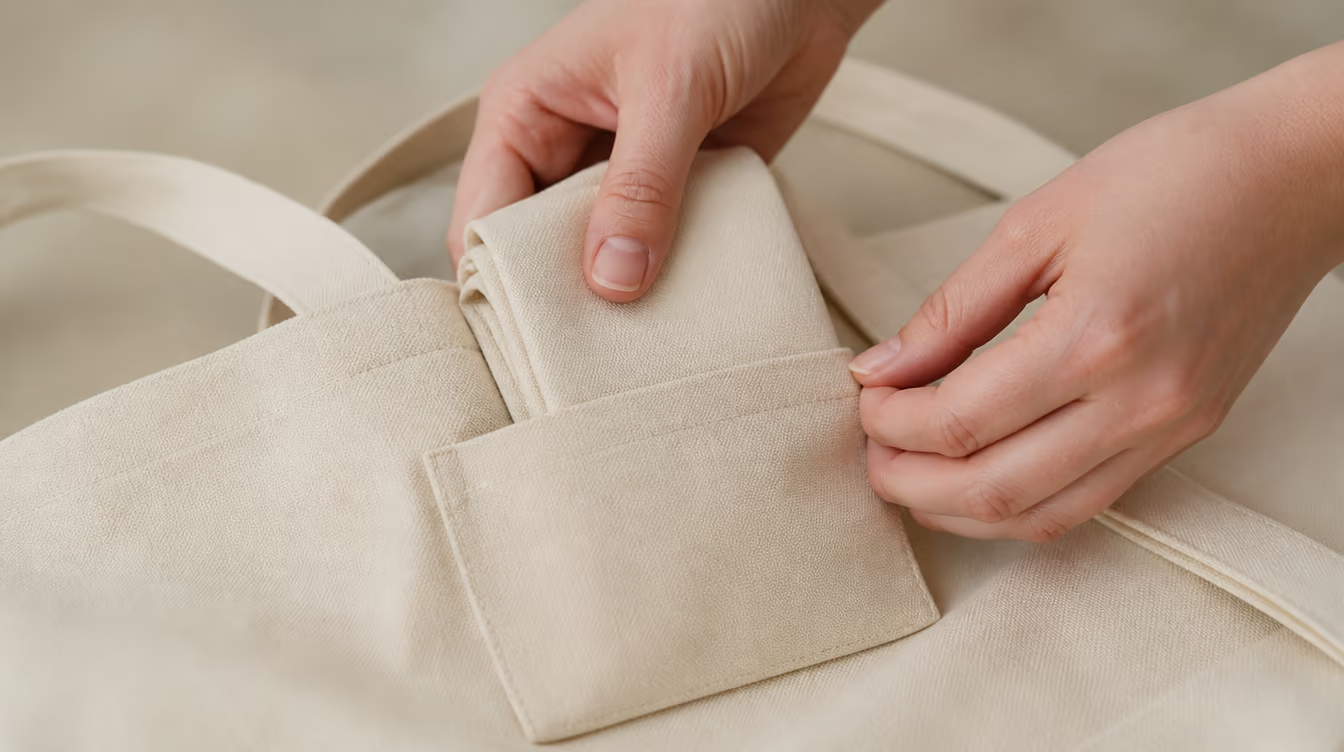
Folds into its own pocket
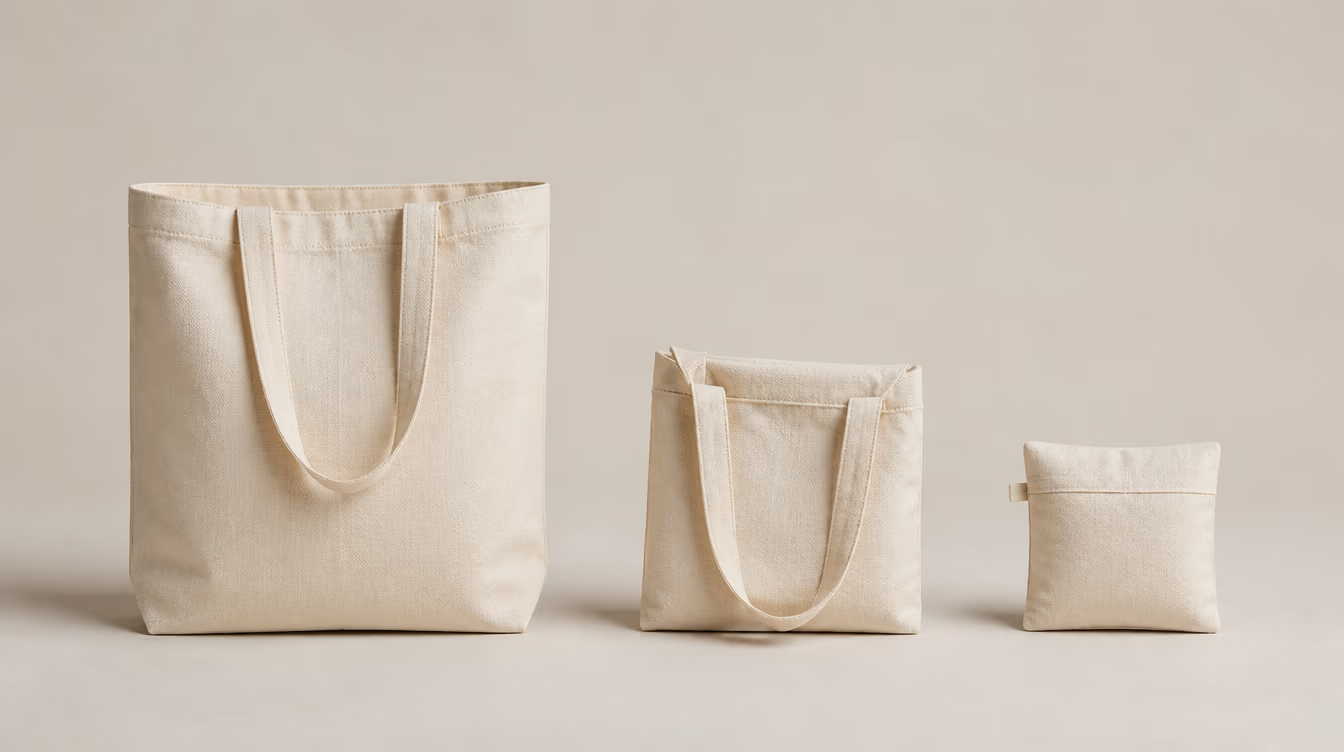
A small pocket is stitched onto the bag itself. The bag folds up and tucks into that pocket, appearing from the outside as a small square. This is the most common and most practical method.
Advantage: No separate part, so nothing gets lost. The folded result is neat and repeatable.
Watch out: The pocket must be sized against the fabric thickness. A tight pocket makes it hard to put the bag back, and by the second use the product is being carried unfolded.
Snap fastened fold
The bag folds along set lines and is held by two snaps. The folded shape is flatter and thinner.
Advantage: A slim profile that sits next to a wallet.
Watch out: Snaps are a trim cost, and metal parts can leave a mark on the fabric over time.
Packs into a drawstring pouch
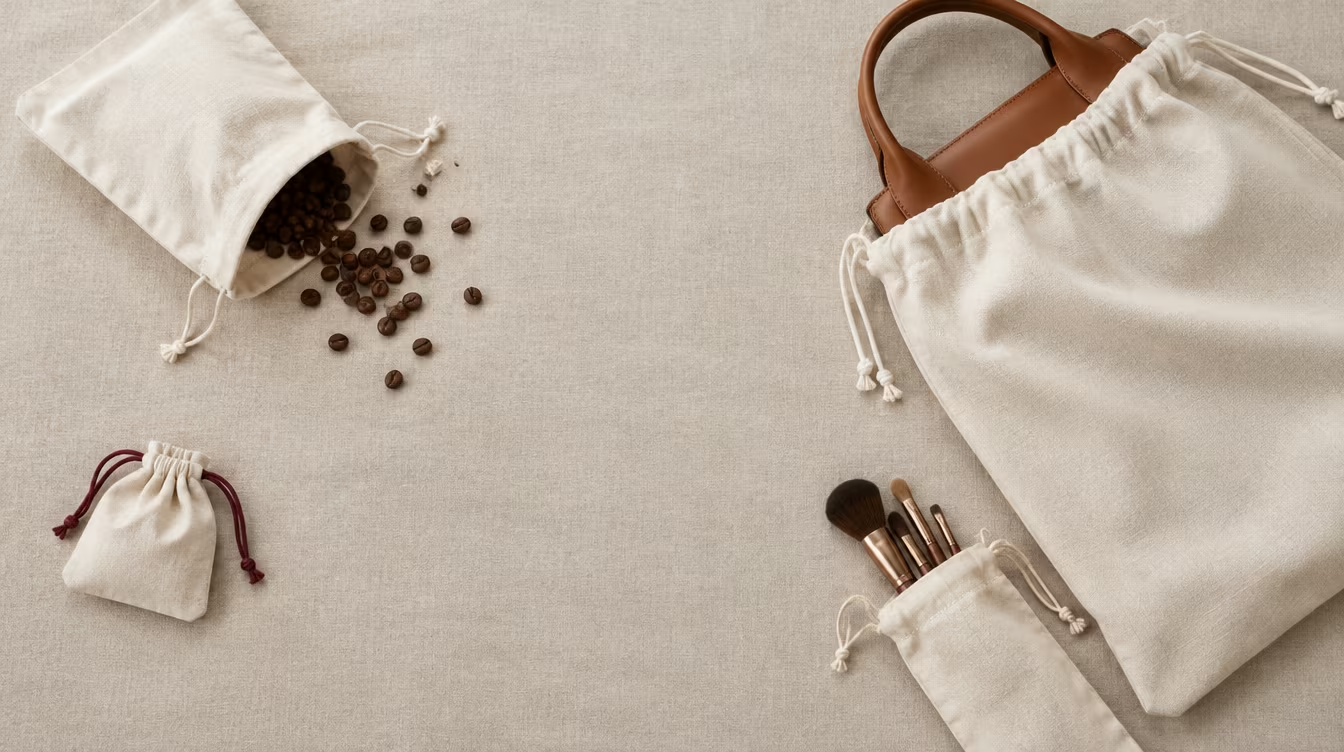
The bag goes into a separate gathered pouch, which also becomes a second promotional surface.
Advantage: It works as two products, and the pouch can carry its own print.
Watch out: A separate part can be lost. Once it is, the product is no longer foldable.
Rolls onto itself
The bag is rolled and secured with its own handle or a stitched elastic.
Advantage: The lowest added cost, no extra part needed.
Watch out: The rolled form is bulkier than the others and staying neat depends on the user's care.
| Mechanism | Folded volume | Added cost | Risk of loss | Ease of use |
|---|---|---|---|---|
| Into its own pocket | Small | Low | None | High |
| Snap fastened | Very small | Medium | None | High |
| Drawstring pouch | Medium | Medium - high | Yes | Medium |
| Rolled | Medium - large | Very low | None | Medium |
Which fabrics fold well
Foldability depends directly on the flexibility and thickness of the fabric. A heavy fabric folds, but it does not get small.
| Fabric | Suitability for folding | Note |
|---|---|---|
| Raw cotton 120 - 150 g | Very suitable | Slips into the pocket easily, no fold marks |
| Raw cotton above 180 g | Limited | The pocket has to be enlarged |
| Canvas | Not suitable | Thickness makes the folded volume too large |
| Gabardine 200 - 220 g | Suitable | The twill weave hides fold marks |
| Nonwoven | Suitable | Very light, but repeated folding leaves creases |
| Impertex | Very suitable | Thin and flexible, preferred in travel products |
| Ripstop type polyester | Very suitable | Gives the smallest folded volume |
For a general comparison of materials see our fabric selection guide.
The difference it makes in freight
This is where the clearest advantage appears, and it is usually left out of quotations.
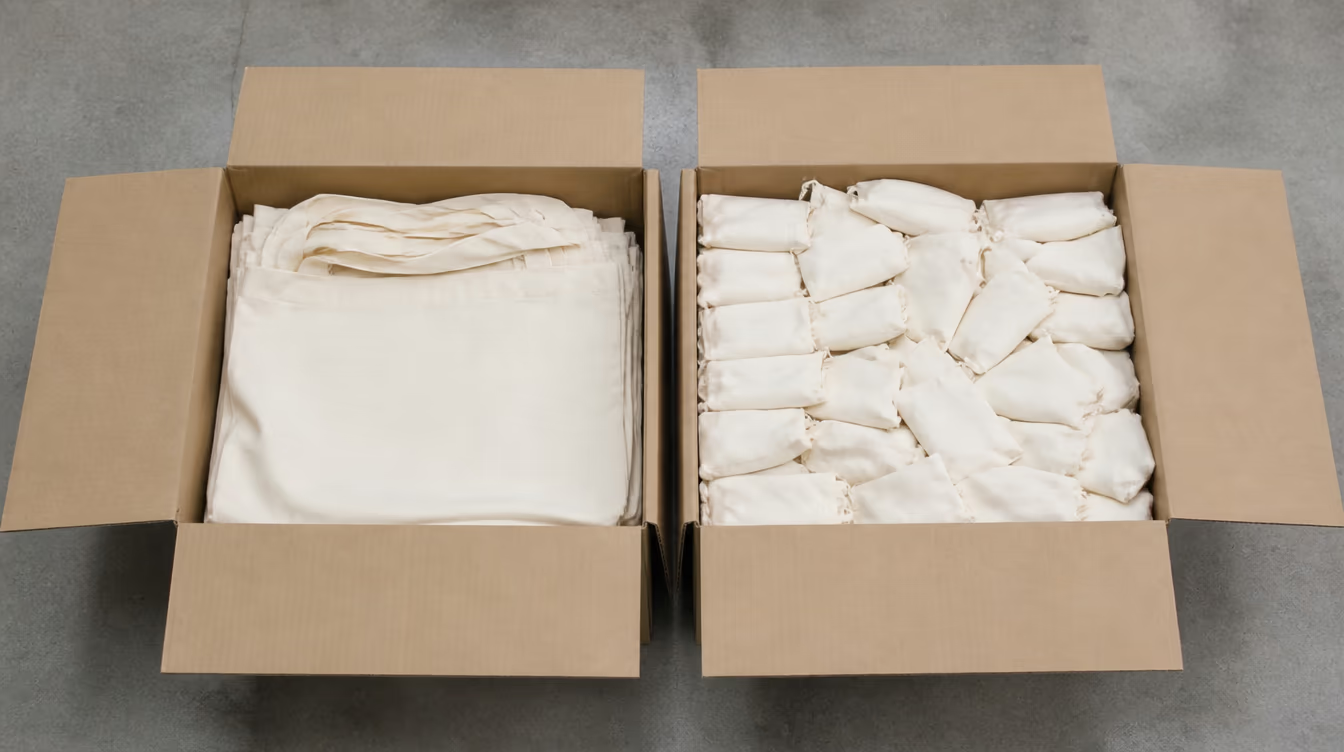
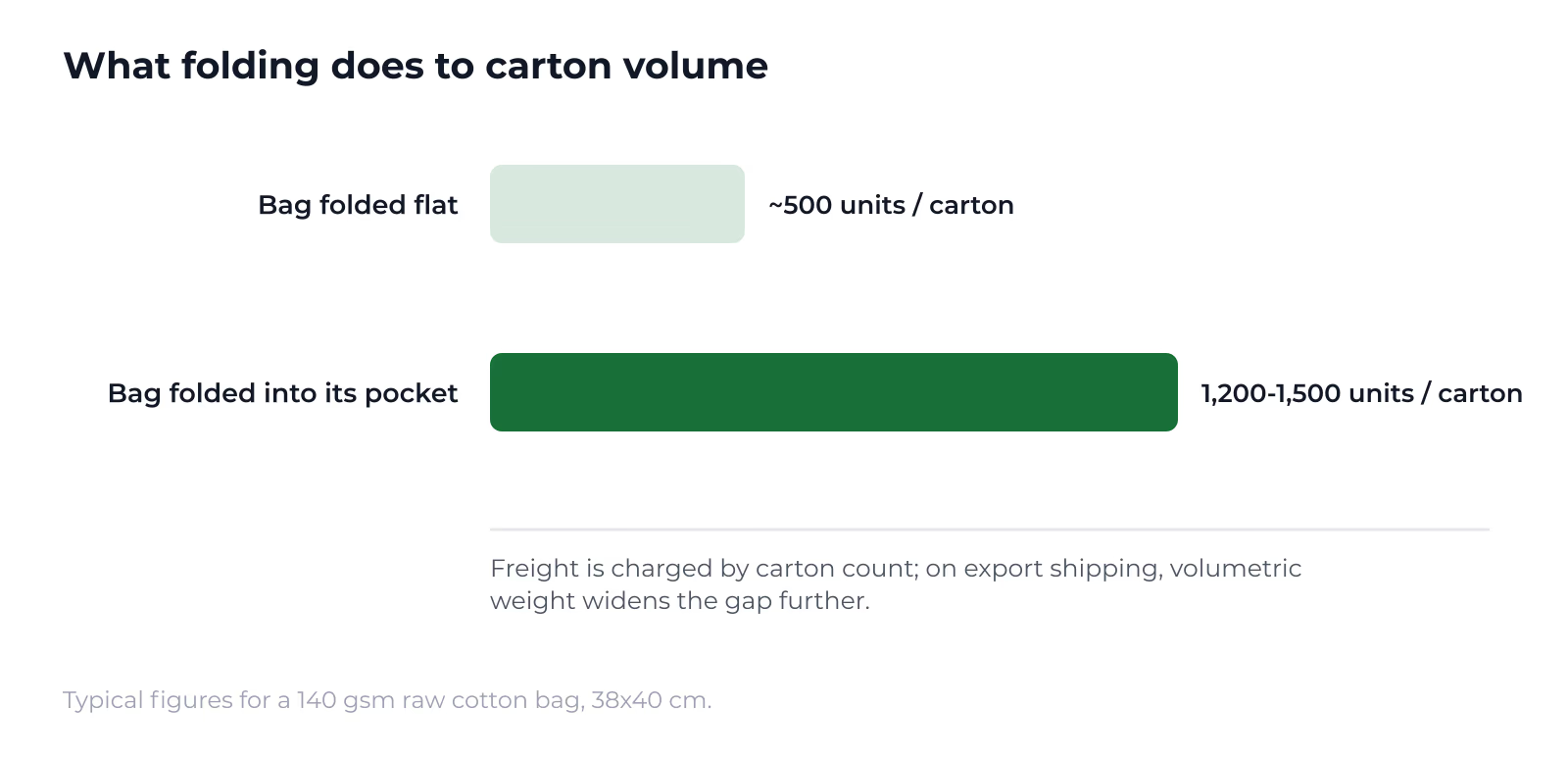
A standard raw cotton bag laid flat takes a certain height in a carton. Folded into its own pocket, that height drops to roughly a third. The practical result is that a carton which normally holds 500 units takes 1,200 to 1,500.
That difference has three effects:
- Freight cost is proportional to carton count and falls noticeably.
- Export shipping is charged on volumetric weight, so the gap widens further.
- Warehouse space for pre campaign stock drops to a third.
So even when a foldable model looks slightly more expensive per unit, once freight and storage are included the total often comes out in its favour. Full cost lines are in our cost breakdown.
Where the print should go
The most common design mistake on a foldable bag is placing the print only on the open body. While the product sits folded in the user's pocket, your brand is invisible.
The right approach is to plan two print areas:
- Body print: the main area seen when the bag is open. The main message belongs here.
- Pocket or pouch print: the small area visible when folded. A simple version of the logo goes here.
Because the pocket area is small, finely detailed logos dissolve. A single colour, simple mark stays far more readable at that size. How each technique behaves on a small area is covered in our printing techniques guide.
One more detail: the body print must not fall on a fold line. Screen print sitting on a fold line cracks with repeated folding. When the pattern is made, fold lines should be marked and the print area positioned accordingly.
Choosing dimensions
On a foldable bag, sizing means thinking about two measurements at once: the open size and the folded size.
| Use | Typical open size | Target folded size |
|---|---|---|
| Pocket sized spare bag | 38 x 40 cm | Palm of a hand |
| Grocery shopping | 42 x 45 cm with gusset | Wallet sized |
| Travel spare bag | 45 x 50 cm | Small pouch |
| Event distribution | 35 x 40 cm | Card sized |
A gusset adds capacity but also enlarges the folded size. If grocery use is the target, the gusset is necessary; if the goal is a spare bag carried in a pocket, a flat model folds smaller.
Durability and folding cycles
A foldable bag is folded again and again, so its fatigue points are different. Three places should be checked:
- Pocket mouth seam: stressed on every fold. Without a reinforcing stitch this is the first thing to fail.
- Fold lines: fabric folded hundreds of times on the same line whitens and thins. A lighter weight is an advantage here.
- Handle root: since foldable models use lighter fabric, handle reinforcement matters more than on a standard bag.
When a sample arrives, fold and unfold it ten times and look at the pocket mouth. This simple test predicts most of what could go wrong in production. The full sample assessment is in our manufacturer selection guide.
Which campaigns it suits
- Grocery and chain retail: the most common use, as a spare bag sold or given at the till.
- Travel and tourism: preferred in hotel and tour gifts because it takes no space in a suitcase.
- Trade shows and congresses: it fits inside the delegate bag and does not have to be carried separately.
- Corporate environmental campaigns: if the aim is to replace a carrier bag, being carried around is critical.
- Dealers and field teams: many units travel in a vehicle without taking space.
Six common design mistakes
- Not sizing the pocket to the fabric thickness. If the folded bag barely fits, the user stops folding it after the second use and the product becomes an ordinary bag.
- Placing the print on a fold line. Screen print cracks with repeated folding. Mark the fold lines at pattern stage and keep the print outside them.
- Choosing heavy fabric. The purpose of a foldable model is to become small. Canvas folds but does not shrink, which removes the reason for the product.
- Leaving the pocket mouth unreinforced. It is the only point stressed on every fold, and the first place to open.
- Planning no print for the folded state. The product spends most of its life folded. A brand not visible then is often not visible at all.
- Adding a gusset unnecessarily. A gusset adds capacity but enlarges the folded size, which usually hurts a pocket sized spare bag.
Sample testing a foldable model
A foldable bag needs a different test from a standard one. When the sample arrives, run these four steps:
- Fold and unfold ten times. Look for loosening at the pocket mouth seam and whitening on the fold lines.
- Measure the folded size. Does the result match the figure the manufacturer quoted? Any gap grows in production.
- Carry it loaded. On light fabric the handle root is truly tested under weight. Five kilos for ten minutes is enough.
- Wash it once and refold. Fabric relaxes slightly after washing; check that it still goes into the pocket.
Those four steps take fifteen minutes and reveal most of what would otherwise surface in production.
Handle selection
On a foldable model the handle plays a different role. It carries the load and also becomes part of the folded volume.
- Self fabric handle: cut from the same fabric as the body, adding no bulk when folded. This is the most common choice on foldable models.
- Webbing handle: stronger, but its thickness enlarges the folded volume. Still preferred when heavy loads are expected.
- Cord handle: takes very little space, but being thin it cuts into the hand under weight. Suited to light use.
- Long shoulder handle: most comfortable in use; its effect on folded volume depends on fabric thickness.
A practical rule on handle length: 30 to 35 centimetres for hand carrying, 55 to 65 centimetres for shoulder carrying suits most users.
Frequently asked questions
How much more does a foldable bag cost than a standard one?
The folding pocket or pouch means extra cutting and stitching, so the unit price sits somewhat higher. But the one third reduction in carton volume lowers freight and storage, so the totals often even out.
Can a canvas bag be foldable?
It can be folded physically, but not if the aim is to become small. A 300 gram canvas bag is still bulky when folded and will not fit a pocket. For a foldable model, 120 to 160 grams or a thin technical fabric is the right range.
How small does it get?
It depends on fabric weight and mechanism. A 140 gram raw cotton bag folding into its own pocket typically reaches palm size, while a thin technical fabric reaches wallet size.
Does the print crack on the fold line?
Screen print falling on a fold line can crack over time. Marking the fold lines at pattern stage and keeping the print area clear of them removes the problem.
Can a pocket fold model be washed?
If it is made from cotton, yes. The bag may relax slightly after washing, and finding it a little tighter to fit into the pocket on the first refold is normal.
Does the recommended quantity change for a foldable model?
Because there is an extra part and an extra seam, setup cost is slightly higher, so the unit price difference is felt more at low quantities. To see the steps for your own requirement, use the quote form.
Pouch model or pocket model?
For long term use the pocket model is safer, since there is no separate part to lose. The pouch model adds a second print surface and looks more considered as a gift.
To compare foldable models by body size and mechanism, see our foldable bag category, and reach our production team for the mechanism that suits your campaign.