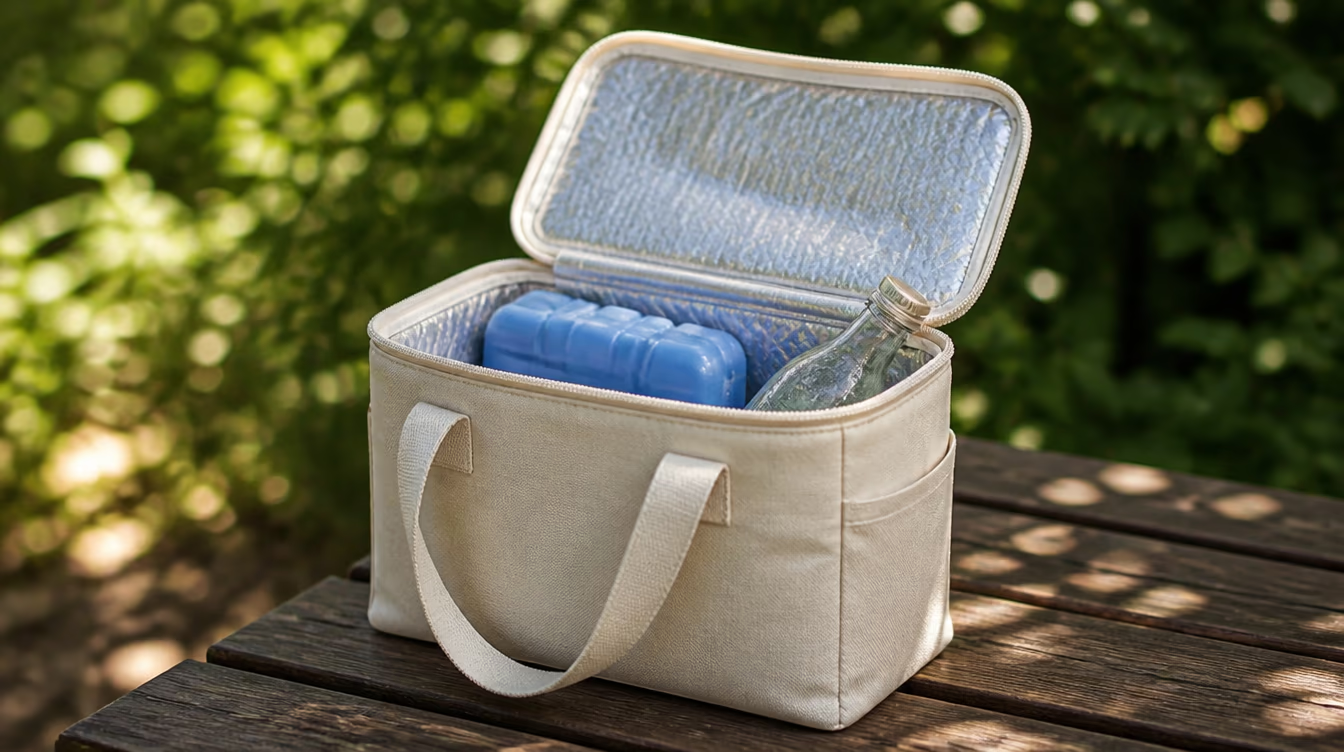
The first question asked about a cooler bag is usually "how many hours does it stay cold". There is no single answer, because holding time depends far less on the bag itself than on four variables: insulation thickness, how well the lid seals, the mass of coolant inside, and how full the bag is. This guide explains how cooler and thermal bags work, which construction suits which use, and what to check when ordering them as promotional items.
How a cooler bag works
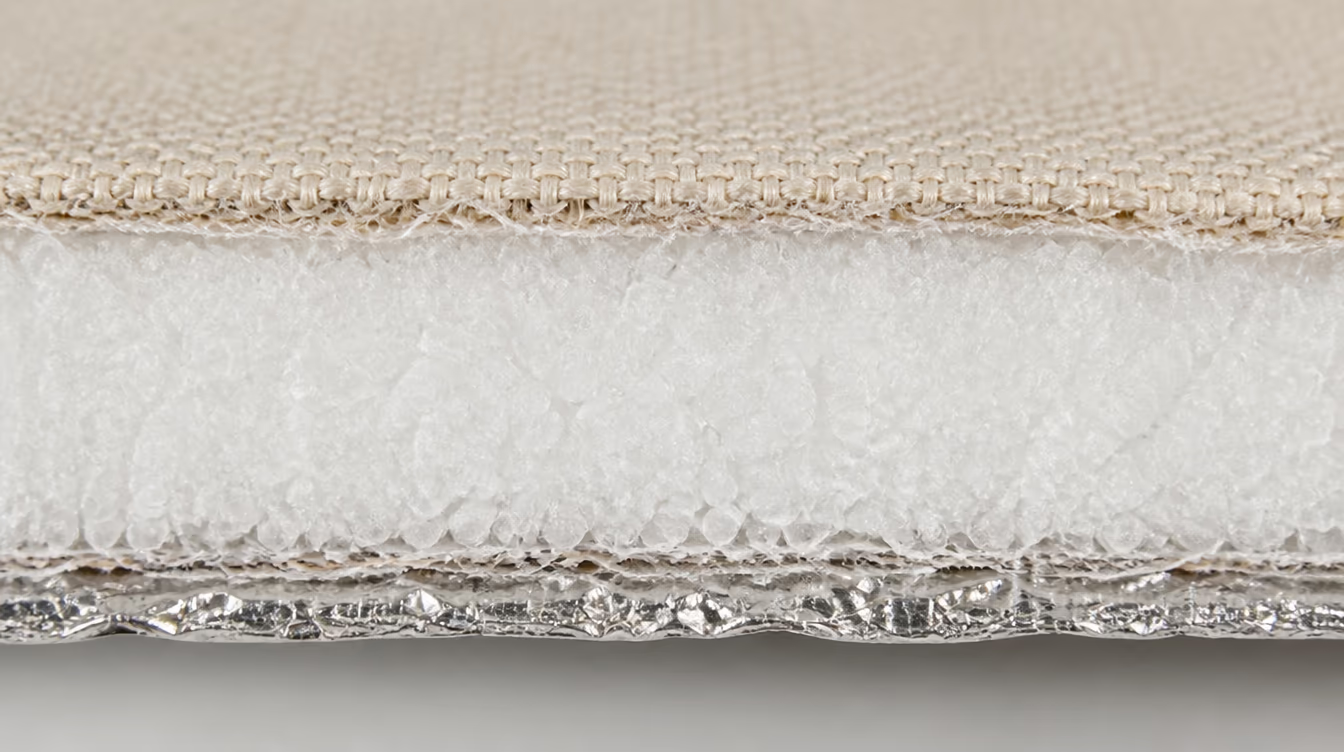
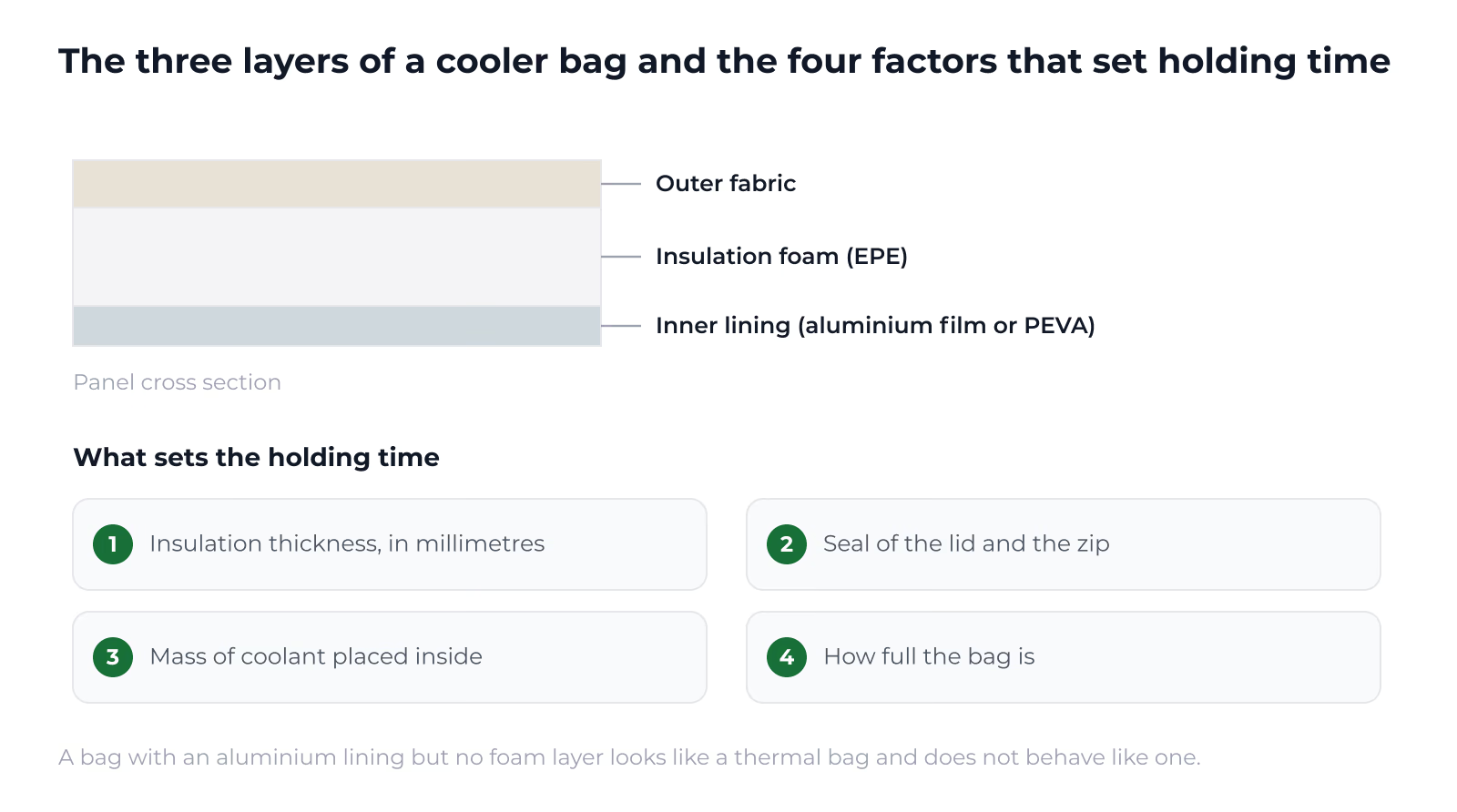
A cooler bag does not cool. It holds the temperature it is given. It works as a three layer barrier:
- Outer fabric: provides strength, carrying and the print surface. Usually impertex, polyester or a coated fabric.
- Insulation layer: the foam layer that slows heat transfer. The most common material is EPE foam and its thickness is measured in millimetres.
- Inner lining: either aluminium coated film or PEVA. The aluminium surface reflects radiant heat back, while PEVA provides the liquid seal.
These three layers work together. A bag with an aluminium lining but no foam layer looks like a thermal bag but behaves only marginally better than an ordinary one. Whether a product is genuinely insulated is felt by pinching the fabric at the edge and judging its thickness.
The four factors that set holding time
1. Insulation thickness
As foam thickness increases, heat transfer slows. Three millimetres is light and economical and covers a daily packed lunch. Five to eight millimetres is the usual range for picnics and field use. Above ten millimetres belongs to professional cold chain products and makes the bag noticeably heavier.
2. Lid and zip sealing
Most heat loss happens at the opening, not through the body. A plain zip passes air even when closed. A roll top, a double zip or a storm flap over the zip extends holding time appreciably. Of two bags with identical insulation, the one with a sealed closure can hold temperature half as long again.
3. Coolant mass inside
An ice pack or a frozen gel pack is the single biggest extender of holding time. The rule is simple: the greater the coolant mass, the longer the hold. Using two large packs instead of one small one is more effective than changing the bag.
4. How full it is
A half empty bag warms faster because of the air inside. If space remains, filling it with a towel or newspaper extends the hold. This is why picking the largest available bag is a mistake; a volume matched to the use performs better.
Choosing the volume
Cooler bag capacity is stated in litres. The right volume decides both performance and portability.
| Use | Suitable volume | Approximate contents |
|---|---|---|
| One person's lunch | 3 - 6 litres | One food container, one drink |
| Office, daily use | 6 - 10 litres | Food container, fruit, two bottles |
| Day out for two | 10 - 15 litres | Sandwiches, drinks, fruit, an ice pack |
| Family picnic | 20 - 30 litres | A full meal, several drinks |
| Field team, long shift | 15 - 25 litres | Several meals and water |
| Grocery shopping, chilled aisle | 15 - 25 litres | Frozen goods, dairy |
The right construction for each use
Carrying food (office, school, field)
Carried once a day, a few hours of holding is enough. Three to five millimetres of insulation, a plain zip and an easily wiped lining will do. Lightness matters more than duration here.
Picnics and outdoors
Longer duration and sun exposure. Insulation above five millimetres, a light coloured outer fabric and a wide opening are preferred. A light outer fabric keeps the interior noticeably cooler in direct sun; a dark one absorbs heat.
Grocery and cold chain carrying
Short duration but high volume. Large capacity and easy carrying matter more than thick insulation. A foldable construction is an advantage here, since it takes no boot space when not in use.
Health and medicine transport
Where a temperature range is critical, insulation thickness and a sealed closure become mandatory. In this use it is not enough to trust the bag; temperature must be monitored separately.
Promotional and corporate gifts
If the recipient uses the bag regularly through the summer, brand visibility is very high. In this scenario the print suitability of the outer fabric and the colour match to the brand matter more than insulation thickness. A cooler bag handed out in summer stays in use far longer than many promotional items at the same budget.
Choosing the outer fabric
| Outer fabric | Strength | Weakness | Printing |
|---|---|---|---|
| Impertex | Water resistant, wipe clean | Does not breathe | Good |
| Polyester (600D type) | Durable, economical | Reads as technical rather than natural | Good |
| Nonwoven | Lowest cost | Short life, tears easily | Medium |
| Canvas or gabardine | Natural look, strong as a corporate gift | Stains when wet | Very good |
For corporate gifts, models combining a cotton outer with an insulated interior deliver both a natural appearance and function. A general fabric comparison is in our fabric selection guide.
Lining and food contact
Where food is carried, the lining must be wipeable and odour resistant. PEVA is the common choice for that reason, while aluminium coated film is more effective at reflecting heat but more vulnerable to cuts and punctures.
Welded inner seams reduce the risk of leakage. A stitched lining lets a spill through to the insulation layer, and the bag eventually holds odour. Checking the inner corners on a sample shows this difference immediately.
Ice packs and coolants
What goes inside determines performance more than anything else, yet it is rarely discussed.
| Type | Strength | Weakness |
|---|---|---|
| Rigid plastic ice pack | Long lasting, reusable many times | Takes space, hard corners |
| Gel pack | Conforms to shape, fills gaps | Unusable once punctured |
| Frozen water bottle | No extra cost, drinkable as it melts | Sweats and can wet the contents |
| Dry ice | Very low temperature | Risky in a closed space, not for daily use |
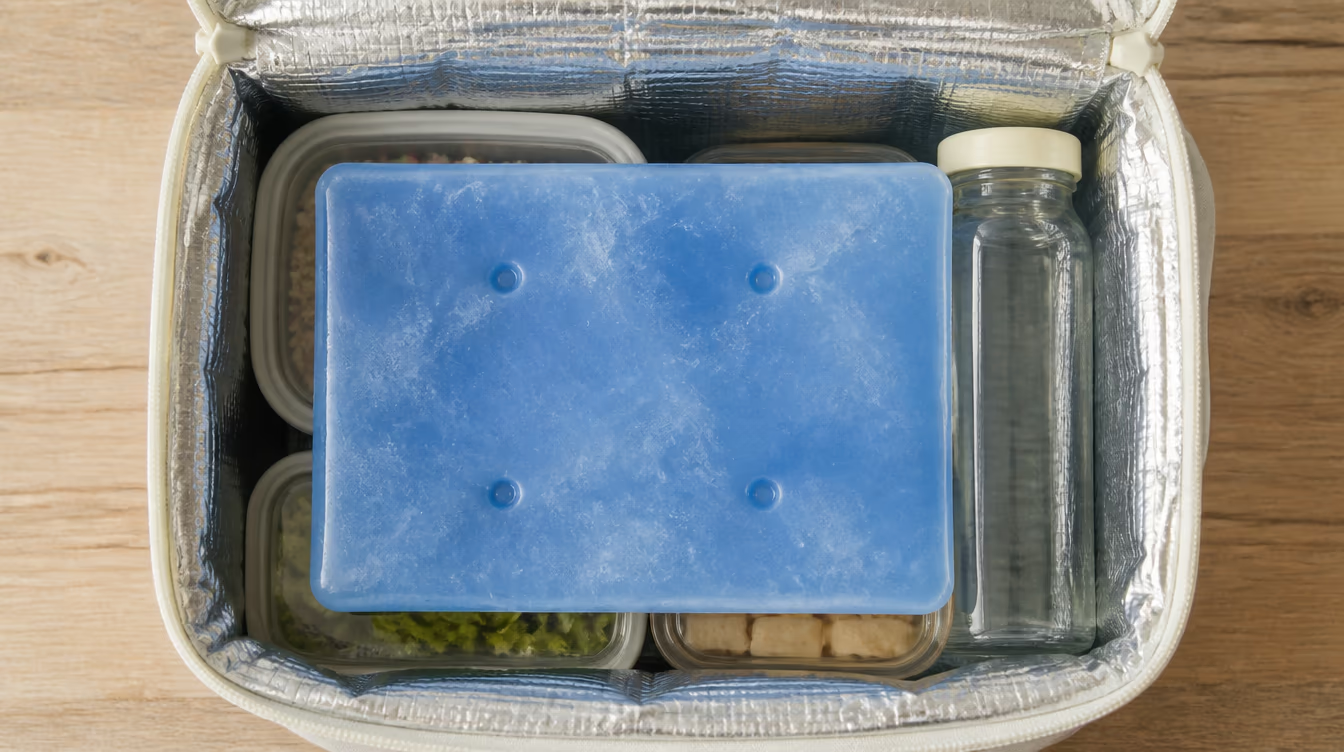
A practical rule: place the coolant on top of the contents. Cold air falls, so a pack on top cools the whole volume, while one underneath only affects its immediate surroundings.
Carrying hot food
Because insulation works in both directions, the same bag serves for hot food, but the conditions differ.
- The container must be sealed. Hot food produces steam; if steam reaches the insulation layer, the bag will hold odour.
- Pre warming helps. Putting a hot water bottle inside for a while before loading stops the interior from drawing heat out of the food.
- Fullness matters here too. Empty space causes rapid loss in hot carrying as well.
- Do not carry hot and cold together. The two work against each other; a compartmented model is needed.
Cleaning and care
- Never machine wash. The insulation foam absorbs water, does not dry, and deforms.
- Wipe the interior with a damp cloth and warm soapy water, then leave it to dry completely.
- Do not close it while damp; that is how odour forms.
- Ice packs should not touch food directly, place a thin cloth between them.
- Store open and dry if it will be unused for a long period.
Lifespan and when to replace
A cooler bag's performance falls over time and the decline is invisible from outside. The foam compresses, the aluminium lining cracks and the zip seal loosens. The bag can look sound while its holding time has shortened considerably.
Four signs that replacement is due:
- Cracking or bubbling in the lining. Once the aluminium film separates, its reflective function is gone.
- A thinner feel to the foam layer. Pinch the fabric between two fingers; if the thickness you used to feel has reduced, the insulation has compressed.
- Persistent odour. Moisture and food residue that reached the insulation do not come out with cleaning.
- A loose zip or lid closure. Most heat loss happens there.
Passing this on to the recipient is worth doing in corporate distribution. A care card or a short instruction on the inner label extends the product's life, and with it your brand visibility.
What to check when ordering for promotion
- Is insulation thickness stated in millimetres? The word "insulated" is not a measurement.
- Is the lining specified? Aluminium film or PEVA, stitched or welded.
- What type of closure? Plain zip, storm flap or roll top.
- Is volume given in litres? If only width, depth and height are quoted, calculate it yourself.
- Does the outer fabric take print well? Some techniques do not hold on coated surfaces; see our printing techniques guide.
- Are the handles rated for the load? A full bag weighs far more than an empty one.
- What is the carton volume? Insulated bags are bulky and freight costs more than for flat bags.
To see how the cost builds up line by line, read our cost breakdown.
Frequently asked questions
How many hours does a cooler bag stay cold?
A single figure would be misleading. The same bag holds several times longer with two large ice packs and a full load. A bag with five millimetres or more of insulation and a covered closure, given enough coolant, comfortably covers a full day of use.
Is a thermal bag the same as a cooler bag?
In everyday use the two names describe the same product. Both hold the existing temperature through insulation, so both keep things cold and hot. The difference is in the naming, not the construction.
Can I carry hot food as well?
Yes. Insulation slows heat transfer in both directions. For hot carrying the container itself must also be sealed, otherwise steam leaves moisture in the lining.
Does it work without an ice pack?
Only to a limited extent. Insulation preserves the existing temperature, it does not cool. If the contents start cold and the bag is full, it holds for a few hours.
Are foldable cooler bags available?
Yes. Thin insulated models can be made foldable. Because foldability limits insulation thickness, holding time falls behind thicker models. For the general logic of foldable products, see our foldable bag guide.
Can a cooler bag be washed?
Not in a machine. The foam absorbs water and, because it does not dry, causes odour and deformation. Wipe both surfaces with a damp cloth.
Which volume is most popular for promotion?
For corporate gifts and field distribution, 10 to 15 litres gives the most balanced result. It covers one person's daily use, is not awkward to carry and does not take excessive freight space.
Do you produce custom sizes with logo printing?
Yes. Dimensions, outer fabric, insulation thickness and printing can each be specified. Send your dimensions and quantity and we will build the specification around your use.
To compare current models by volume and outer fabric, see our cooler bag category, and for custom production reach us through the production page or the contact page.